
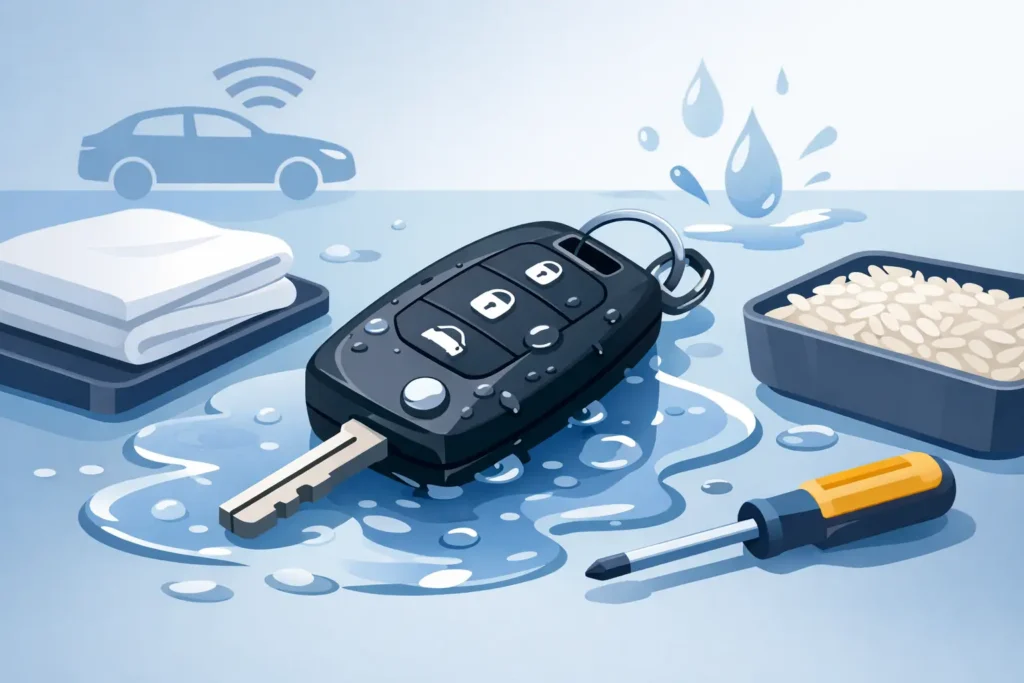
A key fob that went through the wash, landed in a puddle, or got soaked at the beach can turn a normal day into a frustrating one. The right key fob water damage fix depends on how much moisture reached the electronics, how quickly you acted, and what type of key your vehicle uses. A basic remote may recover after careful drying. A modern proximity smart key may need professional replacement and programming.
The most helpful thing you can do is stay calm and avoid repeatedly pressing the buttons to see whether it still works. Every button press can send power through wet components and increase the chance of a short circuit. Start with simple damage control, then decide whether the fob is safe to use or needs attention from an automotive locksmith.
What to Do Immediately After a Key Fob Gets Wet
Remove the key fob from the water right away. If it has a removable mechanical emergency key, slide it out and set it aside to dry. Do not try to start the car, lock the doors, or test the panic button while the fob is wet.
If you can access the battery compartment without forcing the case, remove the battery. This is the most important first step because it stops power from moving through a wet circuit board. Set the battery aside rather than reinstalling it later just because it looks dry. A replacement battery is inexpensive compared with the inconvenience of damaging the fob further.
Gently blot the outside with a clean, absorbent cloth. Hold the fob button-side down and lightly tap it against your palm to encourage trapped water to drain. Do not shake it aggressively. On some smart keys, a hard impact can loosen internal parts or damage the emergency blade release.
If the fob came into contact with salt water, soda, coffee, pool water, or another liquid besides clean rainwater, the risk is higher. These liquids can leave conductive residue and cause corrosion even after the key looks dry. In that situation, professional inspection or replacement is often the more dependable option.
What Not to Do
Water damage creates a strong urge to try every home remedy available. Unfortunately, several common methods can make the problem worse.
Do not use a hair dryer, heat gun, oven, microwave, or place the fob on a radiator. High heat can warp the plastic housing, weaken solder connections, damage the battery contacts, and affect the delicate chip inside. Heat can also push moisture deeper into areas where it is harder to remove.
Avoid spraying the inside with household cleaners, lubricants, or compressed air at close range. Household products can leave residue, while high-pressure air can force moisture beneath small electronic components. If the casing has already been opened, do not scrape the circuit board or touch it unnecessarily.
Rice is also not a reliable repair method. It may absorb some surface moisture from the air, but it does not clean corrosion or remove water trapped under electronic parts. Worse, rice dust can get inside the fob. Air drying in a clean, dry place is a better short-term choice, but drying alone does not guarantee the internal electronics are undamaged.
How Long Should You Let a Wet Key Fob Dry?
With the battery removed, leave the fob open or battery compartment exposed in a dry indoor area for at least 24 to 48 hours. Place it on a clean towel with the button side facing down. Room-temperature airflow is safer than direct heat.
After that period, inspect the battery contacts and visible interior surfaces. White, green, blue, or rusty-looking residue can indicate corrosion. If you see it, do not put in a battery and hope for the best. The fob may work briefly and fail later, leaving you locked out or unable to start the vehicle.
Even if everything looks normal, the true test comes only after the fob is fully dry and a fresh battery is installed. Check each function from a reasonable distance: lock, unlock, trunk release, panic button, and remote start if equipped. For push-button-start vehicles, confirm that the car recognizes the fob and starts normally.
When a Key Fob Water Damage Fix Is Possible
A successful recovery is more likely when the fob was exposed to clean water for a short time, the battery was removed quickly, and there are no signs of corrosion. Some older remote fobs have relatively simple electronics and may begin working normally once fully dry.
It becomes less predictable with modern smart keys, proximity remotes, and flip keys. These units may contain a remote board, a transponder chip, an immobilizer component, and an emergency key blade in one compact housing. The vehicle may unlock but fail to start, or it may start while remote functions stop working. A fob can also work intermittently for days before corrosion causes a complete failure.
That is why we recommend treating a recovered wet key as a backup only until you know it is dependable. If it is your only working key, having a spare made promptly can prevent a much bigger problem later. A spare is especially useful for families, fleet vehicles, and drivers who travel between Tampa Bay communities for work.
Signs You Need a Replacement Instead of Drying
A replacement is usually the practical path when the fob has visible corrosion, a swollen or leaking battery, cracked casing, missing buttons, or no response after proper drying and a new battery. The same is true when the vehicle displays a “key not detected” message, the push-button start will not respond, or the remote works only when held against the start button.
Water can damage only part of the key system. For example, the remote buttons may stop working while the transponder still starts the car. Or the buttons may work, but the car will not recognize the smart key for ignition. These symptoms are useful because they help identify whether the issue is the battery, remote board, transponder, fob shell, or vehicle-side system.
A professional automotive locksmith can test the situation and explain your options. Depending on the vehicle and key style, replacement may involve cutting an emergency blade, supplying a compatible remote or smart key, and programming it to the vehicle. Simply buying a fob shell or an unprogrammed remote does not always restore the ability to start and drive.
Mobile Help for Water-Damaged Car Keys
If your only key was water damaged and your vehicle will not start, you do not necessarily need to arrange a tow to a dealership. A mobile automotive locksmith can come to your location, assess the key, and, when appropriate, create and program a replacement on site.
At Locksmith Squad, we work with many major American, Asian, and European vehicles, including Ford, Chevrolet, Jeep, Toyota, Honda, Nissan, Hyundai, Kia, BMW, Mercedes-Benz, Audi, Volkswagen, and more. We serve drivers in Brandon, Valrico, Tampa, Plant City, Lakeland, St. Petersburg, Clearwater, and nearby areas.
When you call or text, provide the vehicle year, make, model, your location, and whether you have any other working keys. Let us know whether the damaged key is a traditional remote, flip key, transponder key, or push-button-start smart key. Clear information helps us confirm availability and provide an estimate before service.
Protect Your Next Key Fob From Water Damage
No key fob is completely safe from water, even if its case appears tightly sealed. Keep it out of swimsuit pockets, away from cup holders, and clear of laundry piles. If you spend time near pools, beaches, boats, or job sites in rainy weather, a simple waterproof key pouch can be worthwhile.
Most of all, do not wait until a recovered key fails to arrange a backup. A working spare can turn a stressful water-damage incident into a minor inconvenience. If your fob is wet, unreliable, or no longer recognized by your vehicle, call or text Locksmith Squad with your vehicle details for availability and a straightforward estimate.
Pingback: Key Fob Replacement for Modern Car Owners – LOCKSMITH SQUAD