
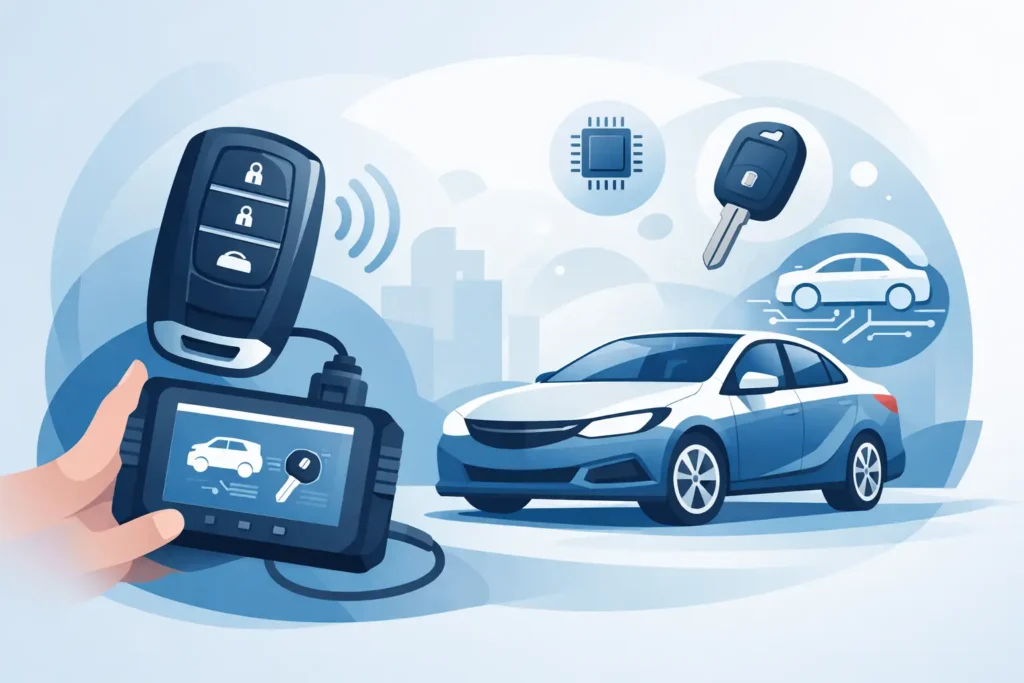
A replacement car key is only useful when your vehicle recognizes it. Automotive key programming is the step that connects a properly cut key, transponder chip, remote, or smart fob to your car’s security system. Without it, a key may turn in the ignition but fail to start the engine, or a remote may open the door but not work as intended.
For drivers dealing with a lost key, a damaged fob, or a second key that never worked correctly, the problem is rarely just the physical key. Modern vehicles use electronic security systems designed to prevent unauthorized starting. That protection is valuable, but it also means key replacement requires the right equipment, vehicle-specific information, and trained service.
What automotive key programming actually does
Most vehicles built over the past few decades have an immobilizer system. The system checks for a recognized electronic signal before allowing the engine to start. On many vehicles, that signal comes from a transponder chip inside the key. On push-button-start models, it typically comes from the smart key or key fob.
Programming adds the new key or remote to the vehicle’s approved list. Depending on the year, make, model, and key type, the process may involve connecting professional diagnostic equipment to the vehicle, accessing security data, programming a transponder, synchronizing remote functions, or completing an on-vehicle procedure.
There is no single process that works for every car. A basic transponder key for an older Ford may be handled very differently from a proximity smart key for a late-model Toyota, BMW, Mercedes-Benz, or Chevrolet. The correct approach depends on the vehicle and on whether at least one working key is still available.
The key types that may need programming
Not every car key has electronics, but most newer vehicle keys do. Understanding the category helps set the right expectations when you need a replacement.
Transponder keys
A transponder key looks similar to a traditional metal key, but it contains a small chip in the head. The chip communicates with the vehicle when the key is placed in the ignition. A newly cut blade may unlock the door and turn the ignition, yet the vehicle can still refuse to start until the transponder is programmed.
Remote-head keys and key fobs
A remote-head key combines a metal key blade with lock, unlock, trunk, or panic buttons. A separate key fob performs similar remote functions without a built-in blade. Programming may involve the remote buttons, the vehicle’s starting system, or both. A fob that unlocks the doors but will not start the car may need a different service than a fob whose buttons have simply lost synchronization.
Smart keys and proximity remotes
Smart keys allow you to unlock and start the vehicle while the fob is nearby. These systems are common on late-model vehicles and usually require more advanced automotive key programming. The emergency blade inside the fob may provide door access, but it does not replace the electronic authorization needed for push-button starting.
When you need a key programmed
The most common situation is a lost or stolen car key. If no working key remains, a locksmith may need to create a new key from vehicle information, cut an emergency blade when applicable, and program the electronic portion from scratch. This is one reason a spare key is more than a convenience. It can make a future replacement simpler and may expand the options available for programming.
You may also need programming after water damage, a failed key fob, a broken key shell, or a battery-related issue. A dead fob battery does not usually erase programming, so replacing the battery is a sensible first step when the remote stops responding. But if the fob has corrosion, physical damage, or intermittent operation after getting wet, a replacement and programming may be needed.
Used vehicles can present another issue. A seller may provide only one key, or an old key may still be stored in the vehicle’s memory. In many cases, adding a spare and reviewing which keys are recognized by the vehicle provides more control and fewer surprises later.
Why a correctly cut key is only half the job
Key cutting and programming solve different problems. Cutting matches the mechanical locks and ignition, while programming communicates with the vehicle’s electronic security system. Both must be right for most modern replacement keys.
This distinction matters when customers buy a blank key or fob online. Some aftermarket options can be suitable for certain vehicles, while others are poor quality, incorrectly configured, or not compatible with the vehicle’s system. A fob can look identical to the original and still have the wrong frequency, chip type, board, or part configuration.
Before purchasing anything, it helps to confirm the vehicle year, make, model, trim when relevant, and the original key style. The vehicle identification number can also help verify the correct key. A professional automotive locksmith can explain whether a customer-supplied key is likely to be usable, though compatibility and condition can affect what is possible.
Mobile programming can keep the vehicle where it is
When all keys are lost, the vehicle will not start, or an ignition issue is involved, driving to a shop is not an option. A mobile automotive locksmith comes to the vehicle’s location with key-cutting machines, diagnostic tools, programming equipment, and common key inventory. That can avoid arranging a tow simply to address a key problem.
Mobile service is particularly useful at home, work, a shopping center, or a roadside location. For Tampa Bay drivers, that may mean help in Brandon, Valrico, Tampa, Plant City, Clearwater, St. Petersburg, Lakeland, or a nearby community without moving the vehicle first.
Locksmith Squad can replace and program many transponder keys, remotes, key fobs, and smart keys on-site for most major American, Asian, and European brands. Availability depends on the vehicle and the key system involved, especially on newer or highly specialized models, so accurate vehicle details are the best starting point.
What to have ready when you call or text
Clear information helps us check availability and provide a more useful estimate. Have the vehicle’s year, make, model, current location, and a description or photo of the key if possible. Let us know whether any working keys remain, whether the vehicle uses an ignition key or push-button start, and what happened before the key stopped working.
If all keys are lost, be prepared to show proof that you own or are authorized to access the vehicle. That is a normal part of responsible automotive locksmith service. It protects vehicle owners and helps ensure we can proceed correctly.
A vehicle that will not start is not always a programming problem. A worn ignition cylinder, damaged key blade, weak vehicle battery, faulty fob battery, steering lock issue, or engine-related fault can produce similar symptoms. A qualified technician should identify the likely cause before recommending a replacement key or programming service.
Protect yourself from the next key emergency
If you currently have one working key, creating a spare is usually the easiest time to do it. You can test the new key while the original is still available and avoid the added complexity of an all-keys-lost situation. Keep the spare in a secure place rather than inside the vehicle, and replace a cracked or water-damaged fob before it fails completely.
If your key is missing, damaged, or no longer recognized by your vehicle, call or text with the year, make, model, location, and key situation. We can discuss the available automotive key programming options and help you choose a practical next step without turning a key problem into a long day.