
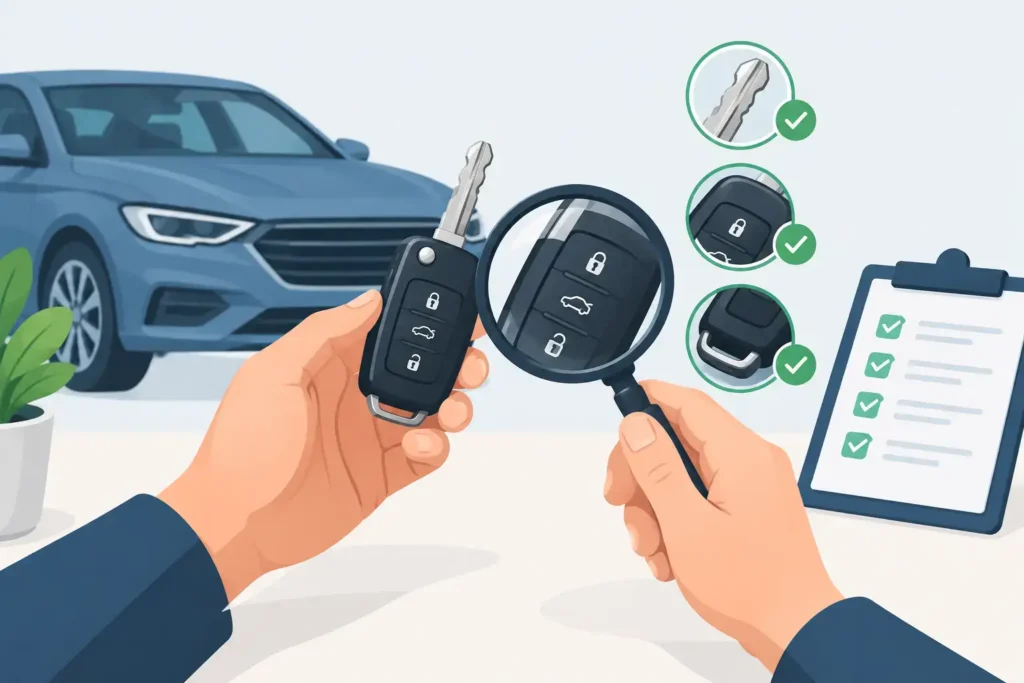
A used vehicle can look spotless, drive well, and still come with an expensive surprise in the cup holder: one worn-out key fob. This used car key inspection guide helps you check every key, remote, emergency blade, and ignition-related function before money changes hands. A few minutes of testing can reveal problems that are much easier to address before the purchase than after you have taken the car home.
Modern car keys do far more than unlock a door. Depending on the vehicle, they may contain a transponder chip, proximity sensor, remote-start controls, a hidden mechanical blade, or programming that communicates with the vehicle’s immobilizer system. When one part stops working, a basic battery may be the answer, but the issue can also involve the key itself, the vehicle receiver, the ignition, or previous programming.
Why the Key Deserves a Pre-Purchase Check
Many used vehicles are sold with only one working key. That may not stop you from driving away, but it changes your risk. If the only key is lost, damaged, or locked inside the vehicle, you have no backup. Replacing a key can range from a straightforward duplicate to a more involved mobile programming service, depending on the year, make, model, and key type.
A second concern is whether the key is original, aftermarket, damaged, or only partly functional. A seller may say, “The remote just needs a battery,” when the remote has water damage, worn buttons, or a programming issue. That does not necessarily mean the seller is being dishonest, but it does mean you should test it yourself.
Ask the seller how many keys they have before the inspection. Ideally, the vehicle comes with two fully working keys. If it has one, factor the cost and availability of a spare into your buying decision. This is especially worthwhile for smart-key vehicles, European models, fleet vehicles, and older cars with keys that may be harder to source.
Used Car Key Inspection Guide: What to Test
Start with every key the seller provides. Do not inspect only the one used to demonstrate the vehicle. If there are two fobs, test both separately. One may start the car while the other only unlocks the doors.
Check the physical condition first
Look closely at the key housing, buttons, key ring area, and mechanical blade. Cracks around the key ring can lead to a fob separating from its blade or electronic portion. Missing button covers, loose shells, sticky buttons, corrosion, and signs of moisture are all worth noting.
For a traditional metal key, inspect the blade for heavy wear, bends, deep scratches, or poorly cut edges. A worn key can work intermittently in a door or ignition. It may also put unnecessary stress on the ignition cylinder over time.
If the vehicle uses a flip key, open and close the blade several times. It should lock firmly in the open position and retract without binding. If it feels loose or does not stay extended, the internal spring mechanism may be failing.
Test every remote button from outside the vehicle
Stand a reasonable distance from the car and test lock, unlock, trunk release, panic, remote start, and power sliding-door functions if equipped. You are looking for consistent operation, not just one successful press.
The doors should respond promptly, and the lights or horn should behave normally. A weak fob battery can shorten the usable range, but intermittent buttons can also point to worn internal contacts. Test each button several times. If the trunk button does not work, confirm whether the vehicle has a separate valet setting or disabled feature before assuming the fob is defective.
Verify that the key starts the vehicle correctly
With a standard ignition key, insert it and turn it through each position slowly. It should enter smoothly and rotate without excessive force. Do not force a sticking key. Resistance can be caused by a worn key blade, a failing ignition cylinder, steering-wheel pressure, or an issue within the ignition assembly.
Once the vehicle starts, watch for a security or immobilizer warning light. A light that stays on or flashes may signal that the vehicle is not recognizing the transponder chip correctly. Some vehicles can start briefly and then shut off when the immobilizer does not authenticate the key.
For push-button-start vehicles, keep the smart key in your pocket or hand and start the car normally. Then place the fob in the backup recognition area described in the owner’s manual, often near the start button, steering column, or center console. If the car only starts when the fob is held in that backup location, the key fob battery may be weak or the proximity function may need further diagnosis.
Test the hidden emergency key blade
Most smart keys have a concealed mechanical key blade. Ask the seller how to release it, then test it in the driver’s door lock. This step is commonly skipped, but it matters when the fob battery dies or the vehicle battery is discharged.
The emergency blade should unlock the door without unusual force. On some vehicles, turning the key in the door may trigger an alarm until the car is started with the programmed fob. That can be normal. What is not normal is a blade that will not enter, will not turn, or appears to belong to a different vehicle.
Confirm that every supplied key is programmed
A key may look correct and operate the mechanical locks while lacking the programming needed to start the vehicle. With two keys, start the car with each one. Then test the remote functions on each fob.
Do not assume a key is properly programmed because it is attached to the same key ring. Sellers sometimes keep an old key from a prior vehicle, purchase an unprogrammed spare, or replace a broken fob shell without confirming that all functions transferred correctly.
Pay Attention to the Ignition and Door Locks
A car key inspection is also an opportunity to notice early ignition and lock problems. If the key requires jiggling, the ignition feels loose, or the key can be removed while the engine is running, the vehicle should be evaluated before you buy it. Those symptoms may point to a worn ignition cylinder or a larger mechanical issue.
Check the driver’s door lock with the mechanical key, then inspect other exterior locks if the vehicle has them. On older vehicles, a previous owner may have replaced an ignition or door lock without matching it to the original key. This can leave you carrying separate keys for the door and ignition. That arrangement is manageable, but it should be disclosed and considered in the price.
Also notice whether the vehicle locks itself unexpectedly, whether a door fails to respond to the remote, or whether the alarm behaves erratically. The key may not be the cause, but these are useful issues to document before purchasing.
Questions to Ask the Seller or Dealer
A clear conversation can prevent assumptions. Ask whether any keys have been lost, whether the fob has been exposed to water, whether the ignition or door locks have been replaced, and whether the vehicle previously had remote start or an aftermarket alarm installed.
It is also reasonable to ask if the keys were programmed recently and why. A recently replaced key is not automatically a concern. In fact, it may be a benefit. But the answer can provide context if the vehicle has had theft damage, ignition trouble, or a history of electrical work.
If you are buying from a dealer, confirm in writing how many working keys are included. If the listing or sales agreement says two keys, make sure both are handed over at delivery. For private-party sales, take a photo of the keys and test them again during the final handoff.
When a Key Problem Should Change Your Offer
A dead coin-cell battery is usually a minor issue. A cracked key shell, missing spare, or worn emergency blade may also be manageable if you understand the likely replacement process. The decision depends on the vehicle and the price.
A non-starting transponder key, damaged smart key, or sticking ignition deserves more caution. Those issues can require specialized diagnostic equipment, key cutting, programming, or ignition repair. Luxury and late-model vehicles may have more restricted key systems, while some older domestic and Asian vehicles can be more straightforward. There is no single replacement cost that applies to every car.
If the seller cannot produce a working key, cannot demonstrate that the car recognizes the fob, or cannot explain an ignition issue, consider having the vehicle inspected by a qualified professional before completing the sale. At minimum, use the missing or defective key as a real point in the negotiation rather than treating it as a small inconvenience.
Get a Spare Key Before You Need One
After purchasing a used vehicle, arranging a spare while one working key is still available is often the practical move. It reduces the stress of a future lost-key situation and gives you a backup to test if the main fob starts acting up.
Locksmith Squad provides mobile car key replacement, key fob programming, transponder key services, emergency key cutting, and ignition assistance across Tampa Bay. We work with many major American, Asian, and European vehicle brands, and we come to your location when a dealership visit or tow is not convenient. Call or text us with the vehicle year, make, model, your location, the key type, and whether any working keys remain for availability and an estimate.
Before you sign for a used vehicle, put the key through the same real-world routine you will use every day: unlock the door, start the car, secure it, and keep a backup plan. That small check can save a frustrating first week of ownership.