
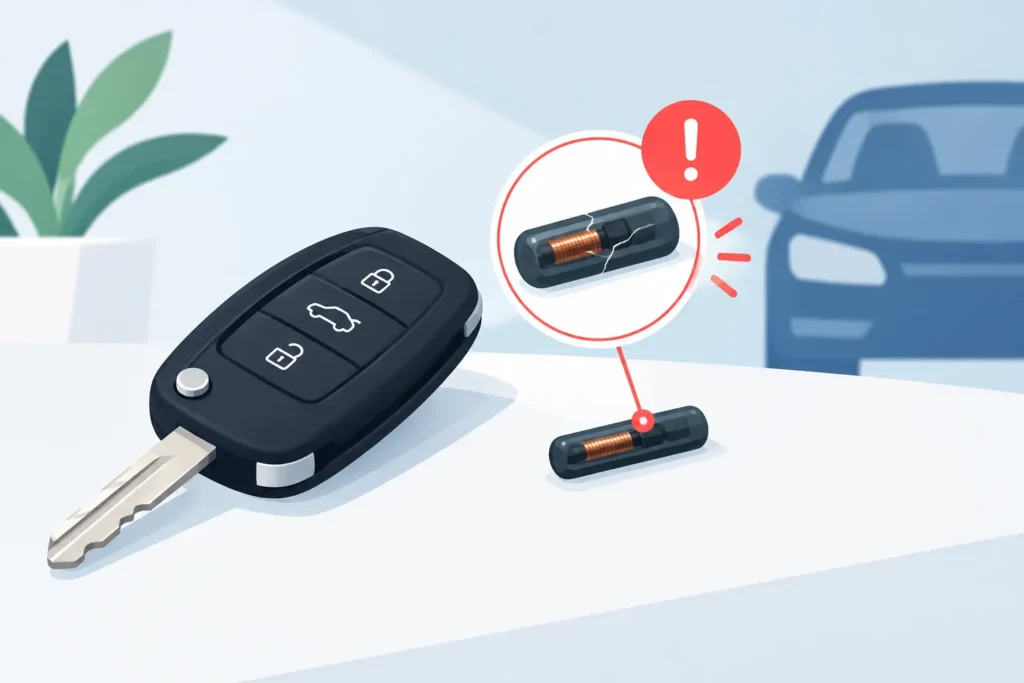
Your car key may turn in the ignition, the dash lights may come on, and yet the engine will not start. If the security light flashes or stays on, you may be trying to identify a failing transponder chip – but the chip is only one possible cause. The key, key fob battery, ignition antenna, vehicle battery, and immobilizer system can all create similar symptoms.
A transponder problem is frustrating because it is often intermittent at first. Your vehicle might start normally at home but refuse to recognize the key after work, at a gas station, or while you are away from your spare. Knowing what to look for can help you avoid replacing the wrong part and get the right help sooner.
What a Transponder Chip Does
A transponder chip is a small electronic component built into many car keys, remote-head keys, and smart keys. When you place the key in the ignition or bring a proximity fob into the vehicle, the car checks for the correct electronic ID. If the ID matches what the vehicle has stored, the immobilizer allows the engine to start.
This is separate from the mechanical cut of the key. A newly cut metal key blade can unlock the door and turn the ignition, but it may not start the vehicle unless its transponder information is programmed correctly. That is why a copied key from a hardware counter can sometimes work in the door but fail at the most important part: starting the car.
The exact setup depends on the vehicle. Many older models use a chip inside a traditional-looking key. Newer Ford, Toyota, Honda, Chevrolet, Nissan, Hyundai, Kia, BMW, Mercedes-Benz, Audi, and other vehicles may use remote-head keys, smart keys, push-button start fobs, or more advanced encrypted systems.
Signs That Point to a Failing Transponder Chip
The most telling symptom is an engine that cranks but will not start, paired with a security or immobilizer warning light. On some vehicles, the engine may start for a second or two and then shut off because the system has not accepted the key’s signal.
Intermittent recognition is another warning sign. If you must remove and reinsert the key several times before the vehicle starts, or if moving the fob closer to the start button changes the result, the key or its communication with the vehicle needs to be tested.
A working spare key provides useful information. If your spare starts the car every time but your daily key does not, the issue is much more likely to be the original key, its chip, its internal circuit, or its programming. If neither key works, the cause may be in the vehicle rather than the keys.
Physical damage matters too. A key that has been run through the wash, dropped in water, crushed, left in extreme heat, or split open can have a damaged chip or circuit board. Water exposure is especially unpredictable. It may work again after drying, then fail later as corrosion develops inside the fob.
The Security Light Is a Clue, Not a Final Diagnosis
Check your owner’s manual for the meaning of your vehicle’s security indicator. A flashing key-shaped icon, padlock symbol, or security light during a no-start condition often points toward an immobilizer issue. Still, it does not automatically prove that the transponder chip has failed.
A weak vehicle battery, a faulty ignition antenna ring, a wiring problem, or a module fault can trigger similar behavior. Professional diagnosis matters because replacing and programming a key will not fix a vehicle-side issue.
Problems That Can Look Like a Bad Chip
Before assuming the transponder is defective, consider the symptoms around it. A dead remote battery can prevent lock, unlock, and remote-start functions, but it does not always affect a traditional transponder chip. On many keys, the chip is powered by the vehicle’s antenna rather than the fob battery. On other smart-key systems, a weak fob battery can absolutely interfere with normal key detection.
If you have push-button start, try the emergency starting procedure listed in your owner’s manual. Many vehicles allow a low-battery smart key to be held against the start button or placed in a designated backup location. If the vehicle starts that way, the fob battery or normal wireless communication may be the issue rather than complete chip failure.
The mechanical side of the key can also create confusion. A worn key blade may not turn the ignition smoothly. A damaged ignition cylinder may feel sticky, catch, or fail to rotate. Those are different problems from an immobilizer rejection, although both can leave you stranded.
Do not overlook the vehicle battery. Low voltage can cause warning lights, erratic module behavior, and no-start symptoms that appear to be key-related. If the dash is dim, electronics are acting unusually, or the engine cranks slowly, start by having the vehicle battery condition checked.
How to Identify a Failing Transponder Chip Without Guessing
The safest first test is simple: try every available key. Test each one with the vehicle battery in normal condition, and pay attention to whether the security light behaves differently. If one key consistently works and one consistently does not, save the working key and avoid relying on the unreliable one.
Next, inspect the problem key. Look for a loose key shell, cracked fob, bent blade, missing buttons, corrosion around the battery compartment, or signs it has been opened before. Do not pry apart a sealed key or attempt to move a chip from one housing to another unless you know exactly what type of key you have. Some chips are small and easy to lose, while many smart keys require specialized programming after replacement.
A qualified automotive locksmith can test the situation with diagnostic equipment and key programming tools. Depending on the vehicle, we may check whether the car detects the key, read immobilizer-related fault information, verify the correct key type, and test a replacement key or fob. This approach separates a failed chip from a programming problem or a fault in the ignition or immobilizer system.
Why a New Key Is Not Always a Simple Copy
Modern vehicle keys are security devices, not just shaped pieces of metal. Some vehicles allow an additional key to be programmed when a working key is present. Others require professional equipment, security access, PIN retrieval, or programming through the vehicle’s diagnostic port. European and late-model vehicles can have additional layers of encryption and may need a more involved process.
That is also why online replacement fobs can be a gamble. The shell may look right while the chip, frequency, board type, or programming compatibility is wrong. Even a correct aftermarket key is only useful if it is cut and programmed properly for your specific year, make, and model.
What to Do When Your Car Will Not Recognize the Key
If the vehicle is in a safe location, use your spare key once to confirm whether the problem follows the original key. Avoid repeated cranking if the engine will not start. It will not make the immobilizer accept an unrecognized key, and it can drain the battery.
Keep the failed key with you. Its key blade, remote, chip, and existing programming may help identify the correct replacement. Have your vehicle year, make, model, location, and a description of the key ready when you call or text. It also helps to mention whether any working keys remain, whether the car cranks, and what the security light is doing.
For drivers in Tampa, Brandon, Valrico, Plant City, Lakeland, Clearwater, St. Petersburg, and nearby communities, mobile service can save the inconvenience of arranging a tow for a key-related problem. Locksmith Squad can come to your location to evaluate many transponder keys, key fobs, smart keys, and ignition-related concerns, then explain the practical options for your vehicle.
A key that works only sometimes is not a key to trust on a busy morning or a long trip. If your spare works, have the unreliable key checked and replaced before it becomes a full lockout or no-start situation.