
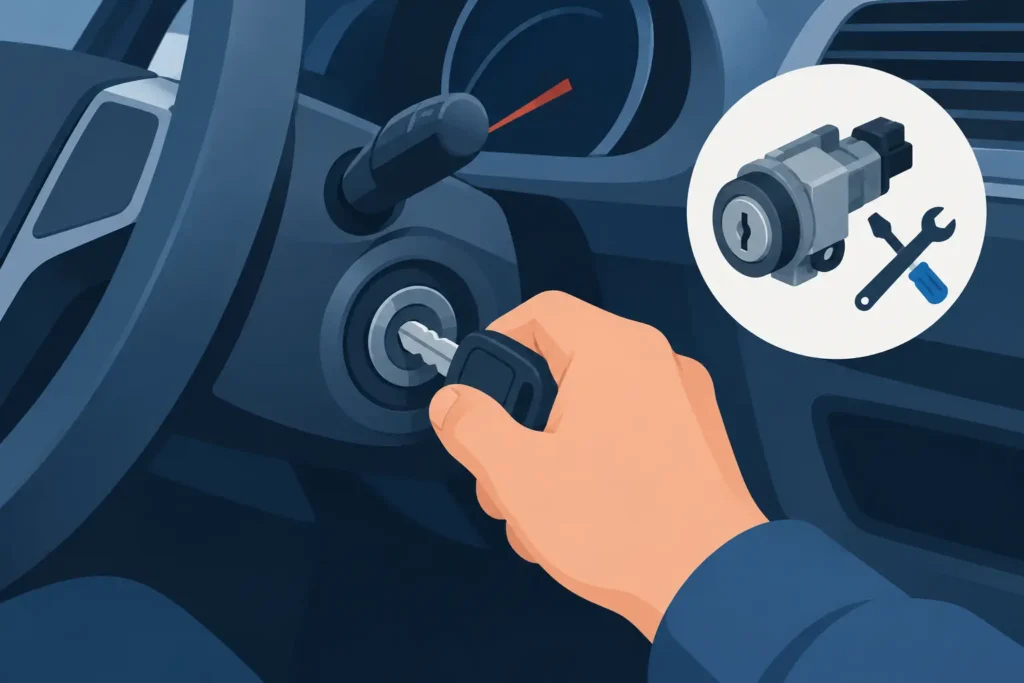
A key that suddenly will not turn can leave you stranded in a parking lot, driveway, or at work with no clear next step. Ignition repair addresses the mechanical and electronic parts involved in recognizing your key and allowing the vehicle to start. The right solution depends on what the key is doing, what type of vehicle you drive, and whether the problem is truly inside the ignition.
Before you force the key, spray products into the cylinder, or try to start the vehicle with a damaged fob, take a moment to narrow down the symptom. A careful diagnosis can protect the key, avoid further damage to the ignition, and prevent an unnecessary tow.
What Ignition Trouble Usually Looks Like
The most obvious sign is a key that will not insert fully, will not turn from the LOCK position, or turns only after repeated attempts. You may also notice that the key is difficult to remove, gets stuck in the ACC position, or has to be jiggled before the dash lights come on. These are commonly mechanical concerns involving the key blade, worn tumblers inside the ignition cylinder, or internal wear in the ignition assembly.
Other symptoms can look similar but require a different approach. If the key turns normally but the engine will not crank, the issue may involve the battery, starter, neutral safety switch, immobilizer system, or another vehicle component. With push-button start vehicles, a weak key fob battery, damaged smart key, or programming issue can prevent the vehicle from recognizing the key even though there is no traditional ignition cylinder to turn.
That distinction matters. We inspect the key and ignition behavior first, then explain whether a locksmith solution is appropriate or whether your vehicle may need mechanical or electrical diagnosis.
Common Causes of Ignition Problems
A worn key is one of the most overlooked causes. Over years of use, the cuts on a metal key can become rounded or shallow. The key may still open the door, but it no longer aligns the ignition’s internal pins precisely enough to turn reliably. A copied key made from an already worn key can make the problem worse.
Ignition cylinders wear as well. Every time a key enters and turns, small internal components move. Eventually, pins, springs, and the cylinder itself can wear or bind. A heavy key ring can add stress over time, especially on older vehicles with a key-in-cylinder ignition.
Damage is another common factor. Keys that have been bent, dropped, forced, or used to pry something open may no longer work correctly. A key fob or transponder key can also suffer water exposure or internal damage, which may affect starting even when the emergency blade turns the ignition.
On some vehicles, a steering wheel lock can make a good key feel stuck. If the wheel is turned tightly against the lock, pressure can bind the ignition. Gently move the steering wheel left and right while applying light turning pressure to the key. If it releases, avoid forcing the key further. If it does not, the cylinder or key may still need professional attention.
What to Do When Your Key Will Not Turn
Start with the simple checks. Make sure the vehicle is in Park or Neutral, set the parking brake when appropriate, and confirm you are using the correct key. If you have a spare key, try it once without forcing it. A spare that works normally is useful information because it points toward wear or damage in the original key rather than a failed ignition.
If the steering wheel is locked, relieve pressure gradually as you turn the wheel and key together. Do not twist the key aggressively or use pliers. A key that breaks inside the ignition turns a manageable service call into a more involved extraction and repair.
Avoid pouring lubricants, oils, or household sprays into the keyway. Some products attract dirt, leave residue, or interfere with the cylinder’s internal parts. Do not hammer the key, file it down, or attempt to pick the ignition. Modern vehicle ignitions can also involve security components that should be handled with the proper equipment and vehicle-specific knowledge.
If the key is stuck in the ignition, do not pull hard enough to bend it. Check that the vehicle is fully in Park and that the steering wheel is not binding. A qualified automotive locksmith can assess whether the problem is the key, cylinder, or a related interlock issue.
How Professional Ignition Repair Works
Proper ignition repair begins with identifying the vehicle’s year, make, model, and the exact symptom. We inspect the existing key when available, check whether another working key behaves differently, and evaluate the ignition without causing unnecessary damage. For many vehicles, the best first step is creating a correctly cut replacement key to test against the ignition.
When the cylinder is worn or damaged, repair may involve rebuilding it, replacing internal components, or replacing the ignition cylinder. The appropriate option depends on the vehicle design and condition of the existing parts. In some cases, the ignition can be configured to work with your existing key. In others, a new key may need to be cut and programmed so the mechanical key and vehicle security system work correctly together.
Programming is especially relevant for transponder keys, remote-head keys, smart keys, and key fobs. Cutting the emergency blade is only part of the job if the vehicle uses an immobilizer. The vehicle must recognize the programmed key before it will start.
A mobile automotive locksmith can often complete this work at your location, which may save you from arranging a tow for a vehicle that cannot be driven. Locksmith Squad brings professional key-cutting and programming equipment to customers across Tampa Bay, including Brandon, Valrico, Tampa, Plant City, Lakeland, Clearwater, and St. Petersburg. Availability and repair options vary by vehicle, so clear vehicle details help us prepare for the job.
Repair or Replacement? It Depends on the Failure
Repair is often worthwhile when the issue is limited to a worn key, internal ignition components, or a cylinder that can be restored without replacing the full assembly. It can preserve convenience and may allow one key to continue operating the doors and ignition.
Replacement can make more sense when the ignition housing is severely damaged, a previous repair was unsuccessful, parts are no longer serviceable, or the cylinder has failed beyond practical rebuilding. Some vehicle designs also use integrated ignition modules or electronic components that call for a different repair path.
There is no responsible one-size-fits-all answer. We explain what we find, what the practical options are, and whether a locksmith repair is the right route before work begins. If the symptom points to a starter, battery, transmission interlock, or another mechanical problem outside the ignition, we will tell you that as well.
Modern Vehicles Need More Than a New Key
Many drivers assume a key that will not start the car simply needs to be copied. That is sometimes true for older vehicles, but modern keys often include a transponder chip or smart-key electronics. A hardware-store copy may open the door yet fail to start the engine because it was not programmed to the vehicle.
We work with many American, Asian, and European makes, including Ford, Chevrolet, Dodge, Jeep, Toyota, Honda, Nissan, Hyundai, Kia, BMW, Mercedes-Benz, Audi, Volkswagen, and more. Vehicle capability varies by year, model, key type, and the condition of the ignition or security system. Providing accurate information lets us check availability and offer a more useful estimate.
If you still have one working key, this is also a good time to consider a spare. A programmed duplicate can prevent a future lockout or all-keys-lost situation, and it gives you a way to compare symptoms if the original key starts acting up again.
Information to Have Ready When You Call
For the fastest, clearest service conversation, have your vehicle year, make, model, and current location ready. Tell us whether the key will not turn, turns but will not start the vehicle, is broken, or is stuck in the ignition. Let us know whether you have any working keys, a spare fob, or the original key.
Photos of the key or fob can be helpful when it is safe to send them. If your vehicle is parked in a garage, at a workplace, or in a location with limited access, mention that too. This allows us to assess the likely equipment and service approach before arriving.
A difficult ignition is frustrating, but forcing it rarely improves the situation. Call or text Locksmith Squad with your vehicle information for availability and an estimate, and we can help you choose a practical next step from where your car is parked.