
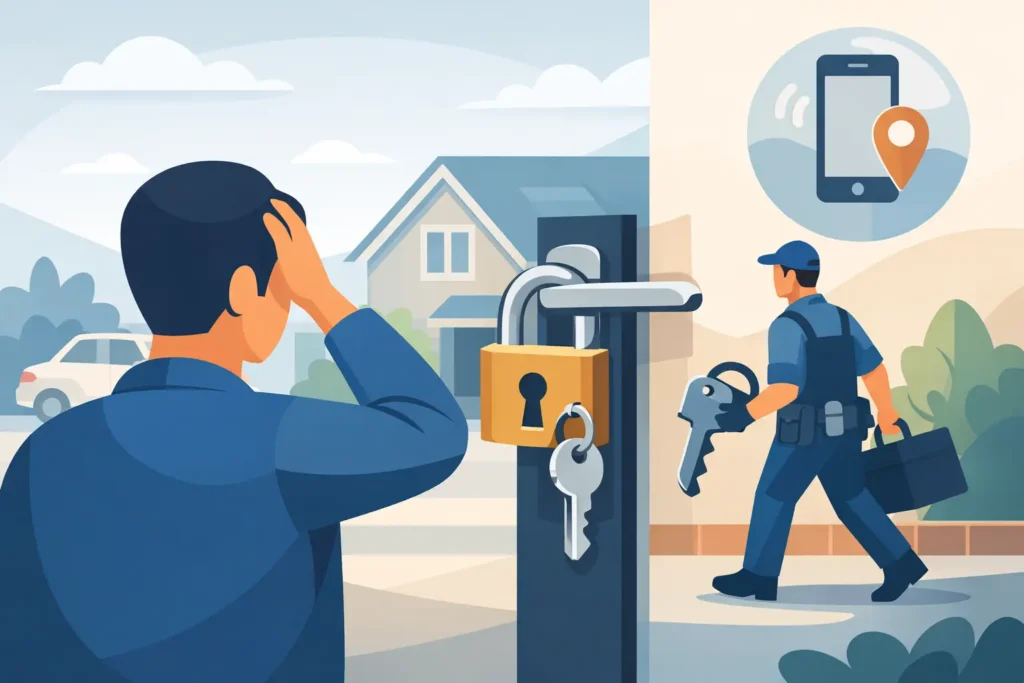
A front door can close behind you in seconds: taking out the trash, checking the mail, walking the dog, or stepping outside while a child is inside. When you need residential lockout help at home, the goal is not simply to get back through the door. It is to regain entry safely, avoid damage, and make sure your home remains secure afterward.
Start With Safety, Not the Lock
Before trying anything, look at the situation around you. If a young child, older adult, pet, or anyone needing medical assistance is locked inside, or if there is a fire, active stove, or other immediate danger, call 911. Emergency responders are the right first call when a life-safety issue is involved.
For a routine lockout, move to a safe, well-lit area. If it is late or you are in an unfamiliar part of your neighborhood, contact a trusted neighbor or family member while you arrange service. Keep your phone charged if possible, and avoid leaving the property to search for help if doing so would leave children or pets unattended outside.
A calm few minutes at the start can prevent a costly mistake. Many damaged doors, bent frames, and broken locks begin with a rushed attempt to force entry.
Residential Lockout Help at Home: Check the Simple Options
First, confirm that every usual entry point is actually secured. Check the front door, back door, garage service door, and any door connected to a screened porch or patio. If a trusted person has a spare key, this may be the easiest solution. Renters may also have a property manager, landlord, or maintenance contact who can confirm whether an authorized keyholder is available.
Do not climb through an open upper-story window or attempt to remove a window screen in a way that risks a fall or damage. The same goes for trying to pry a door, remove hinges, drill the lock, or use improvised tools. These methods can split a door jamb, damage weatherstripping, break a deadbolt, or create a security problem that costs more than professional entry service.
It also matters which type of lock you have. A basic knob lock, a deadbolt, a smart lock, and a high-security lock each require a different approach. A qualified locksmith can assess the hardware and use methods intended to preserve the door and lock whenever practical.
What a Professional Locksmith Can Do
Residential lockout service begins with confirming that you are authorized to enter the property. Be prepared to show identification, proof of residence, a lease, or other reasonable documentation. If your ID is inside, explain that when you call. A professional locksmith can discuss what verification may be needed after entry.
Once authorization is established, the locksmith evaluates the door, lock type, and condition of the hardware. The preferred approach is nondestructive entry when the lock and circumstances allow it. Sometimes a lock is already damaged, severely worn, or designed in a way that requires repair or replacement after entry. You should receive a clear explanation of the available options before work moves forward.
At Locksmith Squad, we provide mobile locksmith assistance for homeowners, renters, landlords, and property managers across Tampa Bay. We come to the location with the tools needed to address common residential lockouts, lock concerns, rekeying needs, and replacement options. Call or text with your address, the type of door or lock involved, and any urgent safety details so we can provide availability and an estimate.
Should You Rekey or Replace the Lock After a Lockout?
Getting inside resolves the immediate problem, but it may reveal a larger security question. Whether you need to rekey, repair, or replace a lock depends on why the lockout happened.
If your key was lost, stolen, or left somewhere that could identify your home, rekeying is often a sensible next step. Rekeying changes the internal configuration of an existing compatible lock so the old key no longer works. It can be a practical option when the hardware is in good condition and you want control over who still has access.
Replacement may be the better choice if the lock is loose, corroded, difficult to turn, damaged from a prior attempt at entry, or no longer provides the level of security you want. Homeowners sometimes choose to replace mismatched locks so one key works across several exterior doors. For landlords and property managers, rekeying between tenants can help maintain key control without replacing every lock.
Smart locks add another consideration. If a battery failed or the keypad malfunctioned, the solution may be as simple as replacing batteries and checking the backup key. If access codes have been shared too widely, deleting old codes and setting new ones may be more important than changing the physical hardware.
If You Rent, Avoid Unauthorized Changes
Renters should be especially careful about drilling, replacing, or modifying locks without permission. Your lease may require the landlord or property manager to handle the lockout, and unauthorized changes can create disputes or leave you responsible for repairs.
If you are locked out of a rental home, contact the property manager first when possible. If you need a locksmith because management is unavailable, keep any invoice and let the locksmith know you are a tenant. After entry, ask whether the lock appears damaged or whether it simply needs to be rekeyed or serviced. Clear documentation helps everyone understand what was done and why.
Avoid These Costly Lockout Shortcuts
Online videos often make forced-entry techniques look easy. They rarely show the repair bill, the risk of injury, or the fact that modern residential doors may have reinforced strike plates, deadbolts, security pins, or multi-point hardware.
Avoid credit cards, screwdrivers, coat hangers, and other makeshift tools. They can damage the latch, scar the door, or break a key off in the lock. Do not drill a lock unless a qualified locksmith has explained why it is necessary. Drilling may solve an entry problem, but it also turns a service call into a lock replacement.
Be cautious when choosing emergency help, too. Ask for the company name, a clear estimate range when possible, and confirmation that the technician will verify authorization before beginning. A legitimate locksmith should be willing to explain what they are doing and answer straightforward questions about your options.
Make the Next Lockout Less Likely
Once you are back inside, take a few practical steps while the experience is fresh. A spare key can help, but only when it is stored responsibly. Hiding one under a mat, fake rock, or nearby planter is easy for others to predict. A better option may be leaving a spare with a trusted nearby person, using a secure key storage solution, or carrying a spare in a wallet or purse if that fits your routine.
Check that each household member has a working key and knows which door is normally used for entry. Test keys before giving them to teenagers, house sitters, or relatives. If a key sticks or requires force, address it early. A worn key or failing lock usually gets worse, not better.
For homeowners with several exterior doors, consider whether your locks can be keyed alike. One properly managed key can be more convenient than a crowded keyring, though it also means losing that key affects more doors. The right choice depends on your household, property layout, and security preferences.
A home lockout is frustrating, but it does not have to become a damaged-door emergency. Stay safe, avoid forced entry, and choose help that explains the condition of your lock and the next best step. If you are locked out in Tampa, Brandon, Valrico, Plant City, Lakeland, Clearwater, or nearby communities, call or text with the details of your situation and get clear guidance before the work begins.