
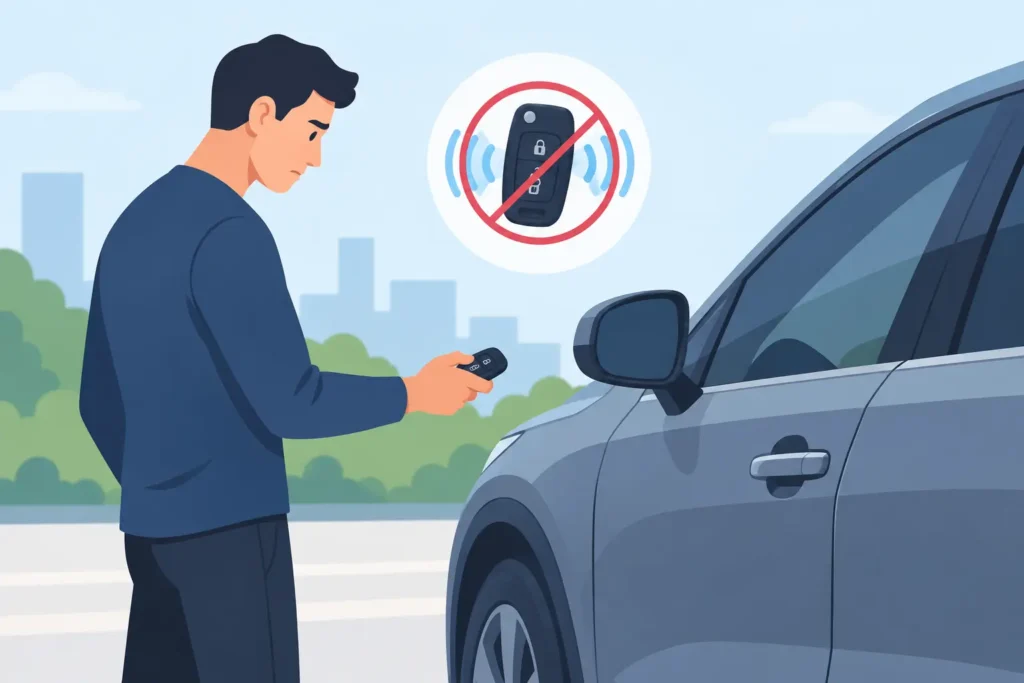
A key fob that suddenly does nothing can turn a normal stop at the grocery store, office, or school into a frustrating problem. Keyless entry is convenient when it works, but modern vehicle keys combine a remote, security chip, emergency key blade, and sometimes a proximity sensor in one small device. When one part fails, the answer is not always as simple as replacing a battery.
For drivers in Tampa Bay, the practical question is usually this: can the vehicle be opened and started again without a tow or a dealership visit? In many cases, a qualified mobile automotive locksmith can diagnose the issue at your location, cut a replacement key if needed, and program the correct remote or smart key for your vehicle.
How keyless entry works
Most keyless entry systems use a small radio transmitter in the fob. When you press the lock, trunk, panic, or door-open button, the fob sends a coded signal to a receiver in the vehicle. The receiver confirms that the signal matches the vehicle and performs the requested function.
Many newer vehicles add a transponder chip or smart-key system. A transponder key must be recognized by the vehicle’s immobilizer before the engine will start. A proximity smart key can communicate with the car while it is in your pocket or bag, allowing push-button start and touch-sensitive door handles.
That distinction matters. A fob may still open the doors but fail to start the vehicle if its transponder function is damaged or no longer programmed. On the other hand, a vehicle may start with a physical key while the remote buttons no longer work. These are related systems, but they are not always the same problem.
Common keyless entry problems
The most common cause is a weak or dead fob battery. Batteries can lose power gradually, so you may notice that you need to stand closer to the car or press the button more than once. Heat, moisture, and heavy daily use can shorten battery life, especially in Florida.
A damaged fob is another frequent issue. Dropping a key, washing it with clothes, exposing it to rain, or leaving it in a hot vehicle can damage the buttons, battery contacts, circuit board, or transponder. A cracked case may look minor, but it can allow moisture and dirt to reach sensitive electronic components.
Sometimes the issue is on the vehicle side. A blown fuse, weak vehicle battery, damaged door-lock actuator, antenna issue, or receiver problem can prevent remote functions from working. If neither of your fobs operates the locks, the car itself may be the source of the failure rather than both keys.
Programming can also be lost or incomplete after a battery replacement, electrical repair, attempted aftermarket remote installation, or key replacement. Not every vehicle allows simple owner programming. Many late-model Ford, Chevrolet, Toyota, Honda, Nissan, BMW, Mercedes-Benz, Audi, and other vehicles require professional diagnostic equipment and security access procedures.
What to try before calling for help
Start by checking whether the vehicle battery has power. If the interior lights, dash, and other electrical systems are completely dead, the issue may be a discharged vehicle battery rather than the key fob. If the vehicle has power, try your spare key or fob if you have one. This is one of the quickest ways to narrow down the problem.
Next, use the emergency key blade. Many smart keys contain a hidden mechanical key that can be removed from the fob. Look for a release tab on the fob body. The driver’s door lock may be visible, or it may be behind a small cover near the handle. Your owner’s manual can show the correct access point for your model.
If the doors open but push-button start does not respond, look for the vehicle’s backup starting procedure. Many vehicles have a designated spot where you hold the fob against the start button, steering column, or center console. This lets the car read the transponder at very close range when the fob battery is weak. The exact location varies by make and model, so follow the instructions for your vehicle.
Replacing the fob battery is reasonable when the case is intact and the remote was working normally before its range declined. Use the correct battery type, install it in the proper direction, and avoid touching the electronic board more than necessary. If a new battery does not restore function, do not assume the fob simply needs to be reprogrammed. It may be physically damaged, or the vehicle may have a separate electrical issue.
When a replacement key or fob makes sense
A replacement is often the most practical option when the original fob is water-damaged, missing buttons, cracked, unreliable, or lost. It is also a good time to add a spare. Waiting until you have lost the only working key can turn a routine duplicate into a more involved all-keys-lost service.
The right replacement depends on the vehicle. Some cars use a basic remote head key with metal blade and buttons. Others use a separate remote and transponder key. Late-model vehicles may require a proximity smart key, a laser-cut emergency blade, and electronic programming to communicate correctly with the immobilizer and keyless entry system.
A professional automotive locksmith can identify the correct key type from the vehicle year, make, model, and VIN. We can also confirm whether the key must be cut, programmed, or both. This helps avoid buying an incompatible fob that looks correct but cannot operate your vehicle.
Keyless entry service at your location
Mobile service is especially useful when the keyless entry issue has left the vehicle parked at home, work, a shopping center, or on the roadside. Rather than arranging a tow, you may be able to have the key or fob created and programmed where the vehicle sits.
At Locksmith Squad, we work with professional key-cutting and programming equipment for many major American, Asian, and European vehicles. Depending on the vehicle and issue, we can replace lost car keys, create spare keys, replace key fobs, program transponder keys and smart keys, cut emergency blades, assist with vehicle lockouts, and address certain ignition-related concerns.
There are limits worth understanding. Some vehicles have manufacturer-specific security systems, parts availability concerns, or conditions that require additional diagnosis. An existing ignition or door-lock problem can also affect the result. Clear information before service helps us explain what is possible for your particular vehicle and provide an accurate estimate.
Details to have ready when you call or text
The fastest way to get useful answers is to provide your vehicle’s year, make, model, and current location. Let us know whether you have any working keys, whether the fob opens the doors or starts the car, and whether the key was lost, damaged, or exposed to water.
If possible, include a photo of the existing key or fob and the vehicle identification number. For a lost-key situation, tell us whether the vehicle is locked and whether you can access proof of ownership. These details help determine the correct equipment, key style, and programming process before we come to you.
Protecting your keyless entry system
A few habits can prevent many fob failures. Keep a spare key in a safe place rather than inside the vehicle. Replace a weakening fob battery before it dies completely, and use a protective case if the key is regularly dropped or carried with heavy items. Avoid leaving keys in direct sun, near standing water, or in pockets that may go through the wash.
If your vehicle displays a “key not detected” message, has intermittent remote operation, or requires repeated button presses, address it before the key stops working completely. A small warning often gives you time to make a spare and avoid being stranded later.
When keyless entry fails, the best next step depends on whether the problem is the fob, the vehicle, or the programming. Call or text Locksmith Squad with your vehicle information for availability and an estimate, and we can help you find the most practical path back into your car and on the road.