
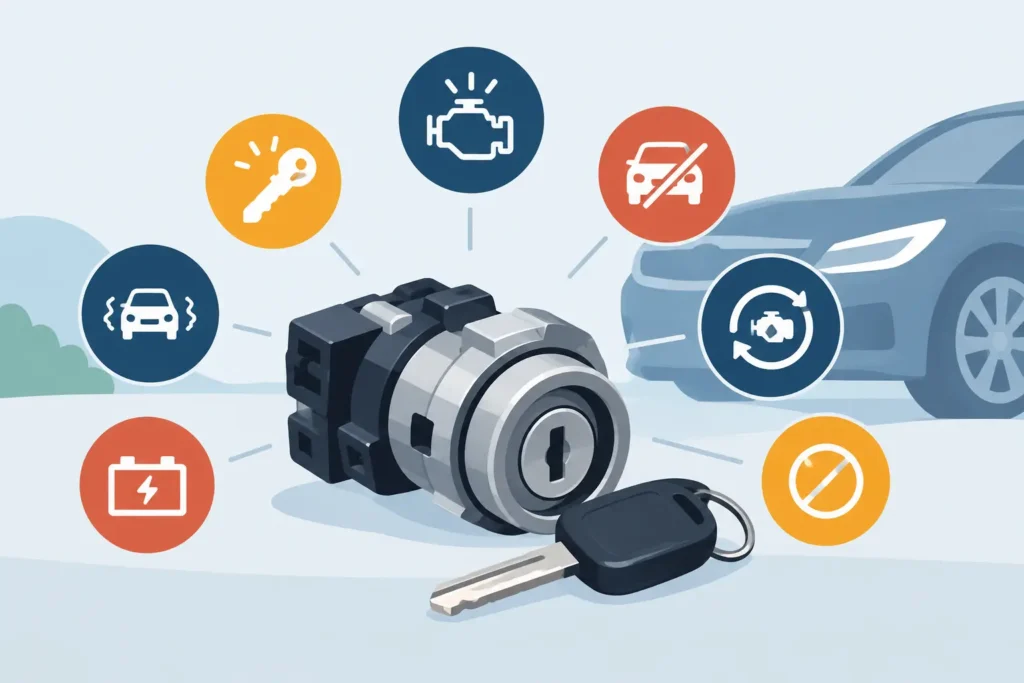
A key that suddenly will not turn can leave you stranded in a parking lot, your driveway, or outside work with no warning. Knowing when to replace an ignition can help you avoid forcing the key, damaging the steering column, or paying for a repair you may not actually need. In many cases, the problem can be repaired or diagnosed on-site by a qualified automotive locksmith.
Your ignition is more than the slot where you insert a key. On many vehicles, it works with the key blade, transponder chip, immobilizer system, and steering-lock components. Push-button vehicles have a different setup, but they can still develop related key recognition or ignition-switch issues. The right solution depends on the symptom, your vehicle, and whether a working key is still available.
7 signs it may be time to replace an ignition
1. The key will not turn, even after basic checks
A key that will not rotate in the ignition is one of the clearest warning signs. Before assuming the ignition cylinder has failed, make sure the vehicle is fully in Park or Neutral and gently move the steering wheel while turning the key. A locked steering wheel can put pressure on the ignition and prevent normal movement.
If the key still will not turn, do not force it. Excessive pressure can break the blade inside the ignition or damage a worn cylinder further. A locksmith can inspect whether the issue is the key, worn internal ignition wafers, the steering lock, or another component.
2. You have to jiggle the key to start the car
Needing to lift, wiggle, or repeatedly reposition the key is not normal wear you should ignore. It often means the cuts on the key blade are worn, the ignition cylinder is worn, or both. Because keys and ignition parts wear together over years of use, the answer may be a properly cut new key rather than a full ignition replacement.
This is why diagnosis matters. Replacing an ignition when the key is the actual issue adds unnecessary cost and may create key-matching complications. We can examine the key and ignition condition before recommending the appropriate repair.
3. The key comes out while the engine is running
If your key can be removed from the ignition before you turn the vehicle off, have the system checked promptly. This can indicate worn internal components in the ignition cylinder. It may not stop the car from starting immediately, but it can progress into a no-start situation or leave you unable to shut the vehicle down normally.
This symptom is especially common in older, high-mileage vehicles with traditional metal keys. Replacing or rebuilding the ignition cylinder before it fails completely is usually more convenient than addressing it after you are stranded.
4. The key gets stuck in the ignition
A stuck key can happen when the vehicle does not recognize that it is in Park, when a steering-wheel lock is binding, or when the ignition cylinder is failing. On automatic vehicles, a shifter or park-interlock issue can also keep the key from returning to the release position.
Do not pull hard on a stuck key. Bending it can turn a manageable repair into a broken-key extraction. A technician should determine whether the issue is mechanical inside the ignition or connected to the shifter, steering column, or electrical system.
5. The ignition feels loose, rough, or inconsistent
An ignition should turn with controlled, predictable movement. If it feels loose, catches between positions, grinds, or rotates farther than it should, internal wear may be developing. You may notice that the dashboard lights do not always come on in the same key position or that the vehicle only starts after several attempts.
Those symptoms do not always mean the ignition must be replaced immediately. Depending on the vehicle, an ignition repair or rekey may be possible. But waiting until the cylinder locks up can make the job more difficult and disrupt your day.
6. The key turns, but the vehicle does not start
This is where ignition problems are often confused with battery, starter, fuel, or immobilizer issues. If the key turns normally but there is no crank, dim dashboard lighting, or a clicking sound, the ignition cylinder may not be the cause. A weak battery or failing starter is often more likely.
However, if turning the key does not consistently activate the dash, accessories, or starter circuit, the ignition switch may be faulty. The ignition cylinder is the mechanical part you turn with the key; the ignition switch is the electrical component that sends power to the vehicle systems. Some vehicles require one part, while others require a more involved repair.
7. Your key is damaged, broken, or heavily worn
A bent, cracked, heavily worn, or partially broken key can damage a healthy ignition. It can also mimic an ignition failure by failing to move the internal pins correctly. If you still have a working key, making a fresh duplicate before it becomes unusable is usually the easiest option.
If a key has broken off inside the ignition, avoid trying to remove it with glue, pliers, or improvised tools. The fragment can be pushed deeper or the ignition can be damaged. Professional broken-key extraction protects the surrounding components and gives you a clearer picture of whether the ignition still needs repair.
When to replace an ignition versus repair it
The decision to repair or replace an ignition depends on the vehicle design and the condition of the components. A locksmith may be able to repair a worn cylinder, remove a broken key, service a sticking component, or make a correctly cut key that restores normal operation. These options can preserve the original ignition and, in some cases, keep the same key working for the doors.
Replacement is more likely when internal parts are severely worn or damaged, the cylinder is seized, a previous failed repair has damaged the assembly, or the ignition cannot be restored reliably. An ignition replacement may need to be rekeyed to match your existing door key. On vehicles with transponder keys, chip keys, remotes, or smart keys, programming may also be part of the job.
That programming step matters. A new mechanical key may turn the replacement ignition, but the vehicle may still not start unless its transponder or smart-key system recognizes the key. We use professional automotive locksmith equipment to address both the mechanical and electronic sides of many modern vehicle systems.
What to do before calling for ignition service
A few details help a mobile locksmith prepare for the right job. Have your vehicle year, make, model, current location, and a description of the symptom ready. Let us know whether the key turns at all, whether it is stuck or broken, whether the steering wheel is locked, and whether any working keys remain.
It is also helpful to mention the key type. A traditional metal key, transponder key, remote-head key, key fob, and proximity smart key each require different tools and procedures. For some services, proof of vehicle ownership may be required before work begins.
If the vehicle is parked safely, avoid repeatedly testing a failing ignition. Every forced turn can wear the key and cylinder more. If you need the vehicle moved, let the technician know whether the steering and transmission are locked so the best service options can be discussed.
Mobile ignition help in Tampa Bay
A mobile automotive locksmith can often come to the vehicle, which can save you the trouble of arranging a tow for an ignition or key issue. Locksmith Squad serves drivers across Tampa Bay, including Brandon, Valrico, Tampa, Plant City, Clearwater, St. Petersburg, Lakeland, and surrounding communities. We work with many American, Asian, and European vehicle makes and can assess ignition trouble alongside car key replacement, transponder programming, smart-key service, and broken-key extraction.
If your key is sticking, turning inconsistently, or refusing to turn at all, call or text us with your vehicle information for availability and an estimate. A clear diagnosis now can help you decide whether a new key, an ignition repair, or a replacement is the sensible next step.