
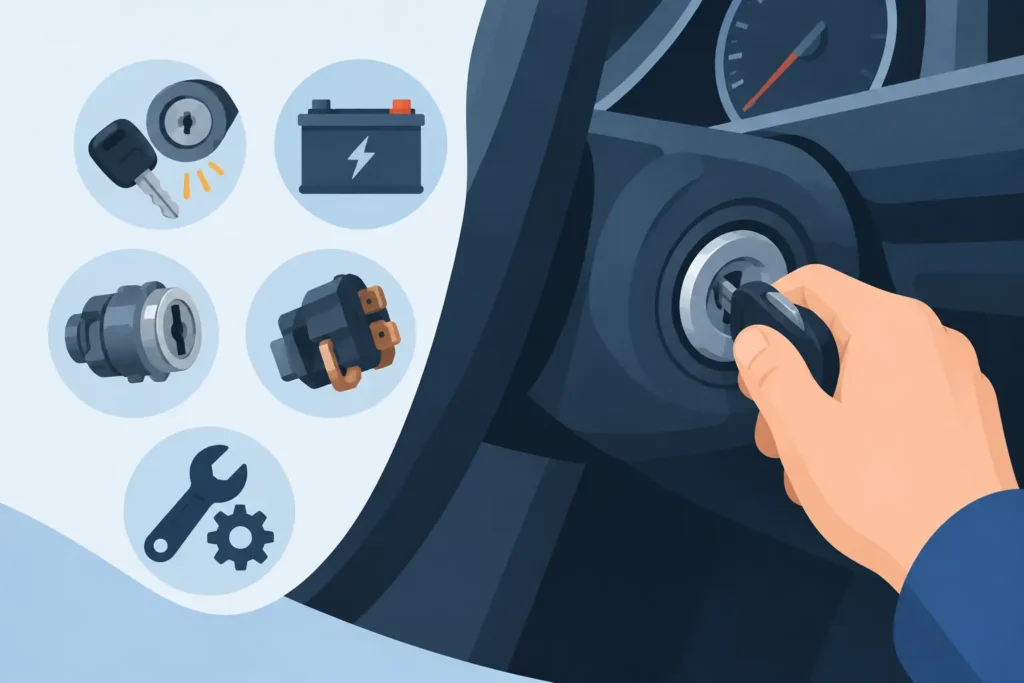
A key that suddenly will not turn can leave you stuck in a parking lot, driveway, or gas station with a vehicle that otherwise seems fine. If you are asking, “why does my ignition stick,” the answer is often related to the steering wheel lock, a worn key, or wear inside the ignition cylinder. The right next step depends on what the key and steering wheel are doing. Forcing either one can turn a manageable repair into a broken key or damaged ignition.
Why Does My Ignition Stick in the First Place?
Your ignition is a mechanical lock designed to recognize the cuts on your key. In many vehicles, it also works alongside an electronic immobilizer system that must recognize the transponder chip before the engine will start. When the mechanical side is binding, the key may not insert fully, may turn only partway, or may refuse to move out of the lock position.
A sticking ignition does not always mean the cylinder has failed. Sometimes the steering wheel is holding pressure against the steering lock. Other times, a worn key is no longer lifting the small internal pins precisely enough. Age, use, debris, a previous damaged key, and ignition-cylinder wear can all contribute.
The symptoms matter. A key that turns after you move the steering wheel points in a different direction than a key that will not go in at all. A professional automotive locksmith can use those details to narrow down the likely issue before coming out.
The Most Common Reasons an Ignition Will Not Turn
The steering wheel lock is under pressure
This is one of the most common and least serious causes. If the front wheels were turned sharply when the vehicle was parked, or the steering wheel was moved after removing the key, the steering lock can bind. The key may feel frozen in the OFF position even though nothing is broken.
Keep your foot on the brake, make sure the vehicle is in Park or Neutral as appropriate, and gently move the steering wheel left and right while applying light, steady turning pressure to the key. Usually, one direction will have a little more movement. Turn the key only while holding the wheel in that direction.
Do not yank the steering wheel or twist the key hard. You are trying to release pressure, not overpower a lock.
The key is worn, bent, or damaged
Vehicle keys wear gradually. The edges of a traditional metal key can become rounded after years of use, especially if it carries a heavy key ring. A key may still unlock the door but no longer align the ignition pins well enough to turn consistently.
Look closely for a bent blade, chipped edges, cracks near the head, or damage around a transponder key shell. If you have a spare key, try it once. A spare that turns normally is a strong sign that the everyday key is the problem.
Avoid repeatedly using a visibly bent or cracked key. It can snap inside the ignition, and broken key extraction is more involved than making a replacement before the break happens.
The ignition cylinder is worn or damaged
Every time a key enters and turns, tiny internal components in the ignition cylinder move. Over time, those components can wear down or stick. This is more common on older vehicles and vehicles with high mileage, but it can happen on any make.
Signs of cylinder trouble include needing to jiggle the key regularly, a key that only turns at a certain angle, or an ignition that occasionally traps the key. The issue may begin as an occasional annoyance and become a complete no-turn situation without much warning.
A certified automotive locksmith can inspect the cylinder and determine whether it can be repaired or needs replacement. On many vehicles, we can provide mobile ignition service and cut or program keys to match the repair, helping you avoid a tow when the vehicle cannot be started.
Dirt, debris, or a foreign object is in the keyway
Pocket lint, dirt, a piece of a broken key, and even a small amount of corrosion can interfere with the keyway. If the key will not fully insert, do not keep pushing it. Forcing it may compact debris farther inside or damage the lock pins.
Do not use a toothpick, paper clip, or other household object to dig inside the ignition. Those items can break off and create a more complicated obstruction. A locksmith has proper extraction and lock-service tools to inspect the keyway without causing unnecessary damage.
The vehicle is not recognizing its starting conditions
Some situations feel like a stuck ignition but are actually related to the vehicle’s safety systems. An automatic vehicle may not allow normal key movement if the shifter is not fully in Park. A manual transmission vehicle may require the clutch to be pressed. On certain models, a failing shift-interlock component or brake-switch issue can also affect starting behavior.
Keyless push-button vehicles have a different setup, but owners may describe the same frustration as a stuck ignition. A weak key fob battery, a fob not being detected, a steering-column lock issue, or a weak vehicle battery can prevent the start button from responding as expected. The mechanical emergency key is usually for the door lock, not for turning a traditional ignition cylinder.
Safe Things to Try Before Calling for Service
Start with the simple checks, but keep them gentle. Confirm the vehicle is fully in Park and apply the parking brake. If your model uses a traditional ignition, relieve steering-wheel pressure as described above. Try a working spare key if you have one.
If the key is already inserted, hold the head of the key straight and use light turning pressure. Do not twist it sideways, pull it toward you, or use pliers. Never hit the key with an object. Those attempts often damage the key blade, crack the plastic transponder head, or break the key off inside the cylinder.
Be cautious with spray lubricants. A product may provide temporary movement, but it can also collect dirt over time and mask a worn-cylinder problem. Graphite products are not suitable for every modern ignition application either. If the key will not turn after a careful steering-wheel release attempt, it is usually better to stop before damage occurs.
When a Stuck Ignition Needs a Locksmith
Call for professional help if the key will not insert fully, will not turn after releasing steering pressure, feels unusually loose, or is stuck in the ignition. You should also call if the key turns but the vehicle does not start, particularly if a security or immobilizer light appears on the dash.
An automotive locksmith can diagnose the mechanical lock, cut a properly fitted replacement key, extract a broken key, repair or replace an ignition cylinder, and program transponder keys or smart keys when the vehicle requires it. The exact solution depends on the year, make, model, key type, and condition of the ignition.
This is especially useful when you are away from home or cannot drive the vehicle. Locksmith Squad provides mobile automotive locksmith service across Tampa Bay, including Brandon, Valrico, Tampa, Plant City, Clearwater, St. Petersburg, and Lakeland-area communities. We come to your location with professional key-cutting, diagnostic, and programming equipment for many American, Asian, and European vehicles.
Before you call or text, have the vehicle year, make, model, current location, and a brief description of the symptom ready. Let us know whether the key is stuck, missing, broken, or simply will not turn, and whether any spare key still works. Proof of ownership may also be required before key or ignition work begins.
Can You Keep Driving After the Ignition Starts Again?
Maybe, but do not assume the issue is gone. If a steering-wheel lock was simply under pressure and the key now turns normally every time, you may be fine. If the ignition has been sticking repeatedly, the key must be jiggled, or the key feels rough going in, the problem can return when you least expect it.
A worn key is often the easiest issue to address early. Making a correctly cut spare can reduce wear on the only working key and give you a backup before a complete failure. A worn ignition cylinder deserves attention too, because waiting can lead to a no-start situation or a key broken inside the lock.
Treat a sticky ignition as useful warning, not something you have to fight with every morning. A clear diagnosis and the right repair can get you back to using your vehicle normally, with a key and ignition you can trust.