
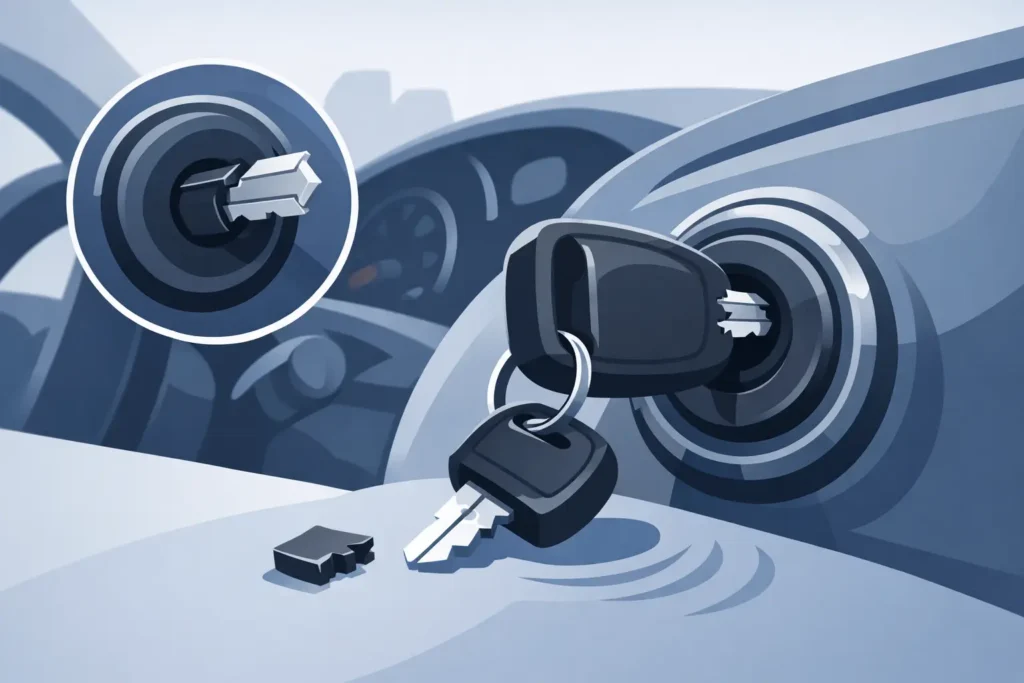
A broken key stuck in ignition is one of those car problems that can turn a normal stop at the store, school pickup, or morning commute into a standstill. The key may have snapped while you were starting the vehicle, or it may have broken when you tried to turn an ignition that already felt stiff. Either way, the safest next move is usually to stop forcing it.
The visible piece of the key is only part of the problem. The broken blade can lodge inside delicate ignition components, and a rushed attempt to remove it can turn a straightforward extraction into an ignition repair or replacement. A professional mobile automotive locksmith can come to your vehicle, remove the fragment with the right tools, assess the ignition, and help replace or program a key when needed.
Do Not Force a Broken Key Stuck in Ignition
It is tempting to grab the exposed end with pliers, a screwdriver, tweezers, or anything else within reach. That approach sometimes works when a large piece is sticking out, but it also commonly pushes the fragment farther into the keyway, bends internal parts, or damages the ignition face.
Avoid turning the ignition cylinder with excessive force. If the key broke because the cylinder was binding, forcing it may worsen the underlying issue. Do not spray heavy lubricants, household oils, or adhesive into the ignition. Super glue is especially risky. It can bond the fragment to internal ignition parts instead of to the tool or broken key, creating a much more complicated repair.
If the vehicle is in a safe place, leave it secured and contact a qualified automotive locksmith. If you are blocking traffic or are in an unsafe location, move yourself to safety first and follow local roadside-assistance or emergency procedures as appropriate.
Why Car Keys Break in the Ignition
Most metal keys do not snap without a reason. Wear is a frequent cause. Over years of use, the cuts on a traditional key blade wear down, and the metal can weaken near the head or at a thin cut. A worn key may still work occasionally, but it can require more pressure to turn – a warning sign worth addressing before it breaks.
A damaged ignition cylinder is another common cause. Dirt, worn wafers, bent internal components, or a cylinder that no longer recognizes the key smoothly can make the key feel difficult to insert, remove, or turn. Cold weather can make an already-stiff mechanism more noticeable, though Florida drivers often see the issue simply from age and daily use.
Keys can also break after being bent, dropped, run over, or used as a tool. A bulky keychain adds weight that can contribute to wear over time, particularly on older ignition systems. For newer vehicles with a smart key or push-button start, the emergency metal blade can still break in the door lock or ignition-related components even though the fob handles most starting functions.
Can You Remove the Broken Piece Yourself?
It depends on how much of the key is visible, whether the ignition is in the locked position, and whether the cylinder was working normally before the break. If a substantial portion is clearly outside the ignition and slides out with almost no resistance, careful removal may be possible. The moment it resists, stop.
At-home extraction kits and improvised tools can be misleading. Ignition keyways are narrow, and many vehicle ignitions have internal components that can be caught or bent by the wrong tool. A fragment that shifts deeper into the cylinder may prevent a locksmith from using the simplest extraction method.
Professional extraction tools are designed to reach alongside the broken blade, catch it securely, and remove it without unnecessary damage. We also evaluate whether the ignition is the reason the key broke. Removing the metal fragment alone does not solve much if a worn or failing cylinder is likely to break the replacement key next week.
Do not try glue, magnets, or drilling
Glue can permanently foul the ignition. Magnets generally will not help with the brass and nickel-silver alloys used in many automotive keys. Drilling can destroy the ignition cylinder, create metal debris inside it, and introduce security and repair issues. These methods create more risk than value.
What a Mobile Automotive Locksmith Can Do
A qualified mobile locksmith brings the extraction tools, key-cutting equipment, diagnostic capability, and programming equipment needed for many vehicles directly to your location. That can save you from arranging a tow when the vehicle cannot be started or when the broken key prevents normal operation.
The process begins with identifying the vehicle and the condition of the ignition. After removing the broken fragment, the locksmith can determine whether the cylinder turns correctly with a properly cut key. If the ignition is worn or damaged, repair or replacement may be the better option. The right solution depends on the vehicle, the style of ignition, the availability of parts, and the severity of the damage.
If you have no usable key left, a locksmith may be able to cut a replacement key on site. Many modern vehicles also need transponder programming, remote programming, or smart key programming before the replacement will start the vehicle. A metal key that physically turns in the ignition is not always enough for vehicles with an immobilizer system.
At Locksmith Squad, we provide mobile broken key extraction, ignition service, car key cutting, and programming for many domestic, Asian, and European makes. Whether you drive a Ford, Chevrolet, Toyota, Honda, Nissan, Hyundai, Kia, Jeep, BMW, Mercedes-Benz, Volkswagen, or another major brand, the available solution depends on your vehicle’s year, model, and key system.
When the Ignition May Need Repair or Replacement
Sometimes a key breaks because it was old. Other times, the ignition itself is the real issue. Signs of an ignition problem include a key that has been getting harder to turn, a key that must be wiggled before the vehicle starts, a key that gets stuck in one position, or a replacement key that still binds after the fragment has been removed.
Older vehicles may have mechanically worn ignition wafers. Some ignitions are damaged after attempted theft, a forced key, or an earlier DIY extraction. In those cases, replacing only the key can be a temporary fix at best.
Ignition repair is often preferable when the cylinder can be restored and matched to the existing key. Replacement may be necessary when internal damage is severe. There are trade-offs: depending on the vehicle, a replacement ignition may need to be keyed to match your door locks, or you may need a separate key for the door and ignition. A professional assessment helps you understand the practical options before work begins.
Information to Have Ready When You Call
A clear description helps us check availability and provide a more accurate estimate. Have your vehicle year, make, model, and current location ready. Tell us whether the key broke in the ignition or door lock, whether any piece is sticking out, whether you have another working key, and whether the vehicle uses a standard key, transponder key, remote-head key, or smart key.
If the ignition was sticking before the break, mention that too. That detail can change the recommended service from a simple extraction to extraction plus ignition repair. Photos can also be useful when sent by text, particularly if you can safely show the broken key head and ignition area without trying to disturb the fragment.
Preventing the Next Broken Key
If your remaining key is worn, bent, cracked, or difficult to turn, make a spare before it becomes an emergency. A duplicate made from a heavily worn key can copy the wear, so it is better to have a locksmith inspect the key and cut the replacement correctly. For electronic keys, make sure the spare is also programmed and tested.
Use the key gently and avoid heavy keychains when possible. If you notice a stiff ignition, do not wait for it to strand you. Having the ignition checked early is usually simpler than dealing with a snapped key and a vehicle that will not start.
If you are in Tampa, Brandon, Valrico, Plant City, Lakeland, Clearwater, St. Petersburg, or a surrounding Tampa Bay community with a broken key in your ignition, call or text Locksmith Squad with your vehicle information and location for availability and an estimate. The best outcome is not just getting the broken piece out – it is leaving you with a key and ignition you can rely on for the next trip.