
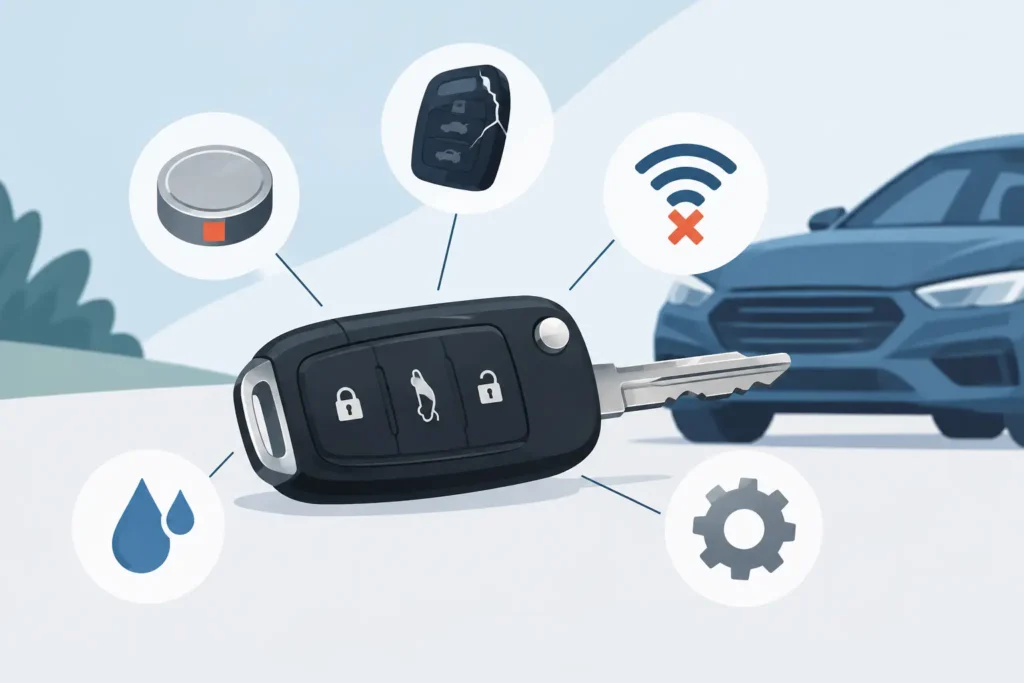
Your car key worked yesterday. Today, the doors will not unlock, the remote range is weak, or the vehicle will not start even though the key is in the ignition. If you are asking, why is car key failing, the answer may be as simple as a weak battery or as involved as a damaged transponder chip, lost programming, or an ignition problem.
The symptoms matter. A key fob that will not lock the doors is not always the same issue as a key that unlocks the vehicle but will not let the engine start. Knowing the difference can save time, prevent unnecessary parts purchases, and help you explain the problem clearly when you call for service.
Why Is Your Car Key Failing? Start With the Symptom
Modern vehicle keys do more than turn a lock. Depending on your vehicle, the key may contain a remote, a proximity sensor, a transponder chip, an emergency blade, and programming that communicates with the vehicle’s immobilizer system. Any one of those parts can fail independently.
For example, your fob may still unlock the doors but fail to start the engine. That often points to a chip or programming issue rather than the small battery inside the remote. On the other hand, a key that starts the car but no longer locks or unlocks the doors may simply have a weak fob battery, worn buttons, or a damaged remote circuit board.
A useful first question is whether another working key does the same thing. If a spare key works normally, the issue is likely with the failing key. If neither key works, the vehicle battery, receiver, ignition, door lock, or an electrical problem may be involved.
A Weak Key Fob Battery Is a Common Cause
A weak fob battery is one of the most frequent reasons for intermittent remote problems. You may notice that you have to stand closer to the vehicle, press the button several times, or hold the fob at a certain angle before the doors respond. Some vehicles display a “key fob battery low” message, but not every vehicle gives a warning.
Replacing the battery can be a reasonable first step if the remote buttons have become unreliable. Use the correct battery type and install it in the same orientation as the original. Be careful when opening the fob. Forcing the case open with the wrong tool can break retaining tabs, damage buttons, or crack the circuit board.
Battery replacement is not a cure for every key problem. A new battery will not repair a broken transponder chip, restore lost programming, or fix an ignition cylinder. If the remote works after the battery change but the vehicle still will not recognize the key for starting, professional diagnostics may be needed.
The Vehicle Battery Can Create Similar Symptoms
A low vehicle battery can make a working key appear faulty. The doors may respond slowly, the alarm may behave unpredictably, or the push-button start system may not recognize the fob consistently. If dashboard lights are dim, the vehicle clicks when you try to start it, or multiple electrical features act strangely, have the vehicle battery checked before assuming the key is the only issue.
Wear, Damage, and Water Exposure Can Stop a Key From Working
Car keys spend a hard life in pockets, bags, cup holders, and occasionally the washing machine. Physical damage is especially common with older metal keys and flip keys. The blade can wear down over time, bend, crack, or break off in the ignition or door lock. A worn blade may turn inconsistently, stick in the ignition, or work in one lock but not another.
Key fobs have their own weak points. Buttons can wear out or tear, solder connections can loosen after repeated drops, and the internal circuit board can be damaged by water or humidity. A fob that worked before it went through the wash may need more than a battery. Corrosion can continue to affect the board after it dries.
Florida heat also takes a toll. Leaving a fob in a hot vehicle, exposing it to moisture, or dropping it on pavement can shorten its life. If the case is separating, the key blade is loose, or the buttons only work occasionally, it is often smarter to arrange a replacement before you are locked out or stranded with no working key.
Transponder, Smart Key, and Programming Problems
Many vehicles made over the last several decades use an immobilizer system. A transponder key contains a small electronic chip that must be recognized by the vehicle before the engine will start. Smart keys and proximity fobs do the same job without requiring you to insert a blade into the ignition on many models.
When the transponder chip fails, the mechanical key may still turn the ignition, but the engine may not start or may start briefly and shut off. A push-button-start vehicle may show “key not detected” or a similar message. These issues are not generally solved by changing the fob battery.
Programming can also be lost or affected after a failed module, electrical issue, improper key programming attempt, or use of an incorrect aftermarket key. Not every replacement fob is compatible simply because it looks similar. The frequency, chip type, remote functions, and programming requirements must match the vehicle.
This is where professional automotive locksmith equipment matters. A qualified mobile locksmith can identify the proper key or fob, cut an emergency blade when needed, and program many transponder keys, remotes, and smart keys at your location. The procedure depends on the year, make, model, and security system. Some vehicles are straightforward, while others require advanced diagnostic tools and additional verification.
The Problem May Be the Ignition, Not the Car Key
If the key will not turn, does not come out easily, or only works when you jiggle it, the ignition cylinder may be worn or damaged. For vehicles with traditional ignitions, years of use can wear the internal components enough that even a good key will no longer operate smoothly.
Do not force the key. Excess pressure can snap the blade inside the ignition, turn a repair into a broken key extraction, or damage steering-column components. If the steering wheel is locked, gently move the wheel left and right while applying light turning pressure to the key. If it still will not turn, stop rather than forcing it.
A locksmith can assess whether the key blade is worn, the ignition is failing, or both are contributing to the issue. In many cases, we can provide ignition repair or replacement and make a properly cut key without requiring you to tow the vehicle to a dealership.
Signal Interference and Key Detection Issues
Smart key systems rely on radio signals, so interference can occasionally cause a temporary problem. This is more likely in parking garages, near certain electronic equipment, or around strong radio-frequency sources. Moving the vehicle or trying the fob closer to the start button or designated backup detection area may help, depending on the vehicle.
Always check your owner’s manual for the manufacturer’s emergency-start procedure. Many push-button vehicles have a specific location where you can hold the fob if its battery is weak. That procedure is useful when you need to get home, but it does not repair the underlying problem.
Also consider what is attached to your key ring. A heavy keychain can contribute to ignition wear on some traditional ignition systems. Keeping the key ring lighter is a small habit that may help protect the ignition over time.
What You Can Safely Try Before Calling for Help
Before arranging car key replacement, check for visible damage, try your spare key if you have one, and confirm whether the vehicle battery seems healthy. If the fob remote is weak, replace its battery carefully with the correct type. For a smart key that is not detected, try the manufacturer’s backup-start method in the owner’s manual.
Avoid repeatedly attempting to start the vehicle if a key is stuck or the ignition feels rough. Do not use glue, tape, or improvised repairs on a cracked blade. Avoid buying a random replacement key online unless you have confirmed its exact compatibility and understand that cutting and programming may still be required.
When Mobile Car Key Service Makes Sense
If you have lost all keys, have a broken key, need a spare, or your vehicle will not recognize the fob, mobile service can be much more convenient than arranging a tow. Locksmith Squad comes to your location with professional cutting and programming equipment for many American, Asian, and European vehicles.
We assist drivers throughout Tampa Bay, including Brandon, Valrico, Tampa, Plant City, Clearwater, St. Petersburg, and Lakeland. We can replace and program many key fobs, transponder keys, smart keys, and emergency blades, while also addressing lockout, broken-key, and ignition concerns.
When you call or text, have your vehicle year, make, model, current location, and a description of the key problem ready. Let us know whether any working key remains and whether the vehicle has a traditional ignition or push-button start. That information helps us check availability and provide an accurate estimate.
A failing car key is frustrating, but it does not always mean the most expensive repair. Treat the symptoms as useful clues, avoid forcing a damaged key, and get help before your only working key becomes no key at all.