
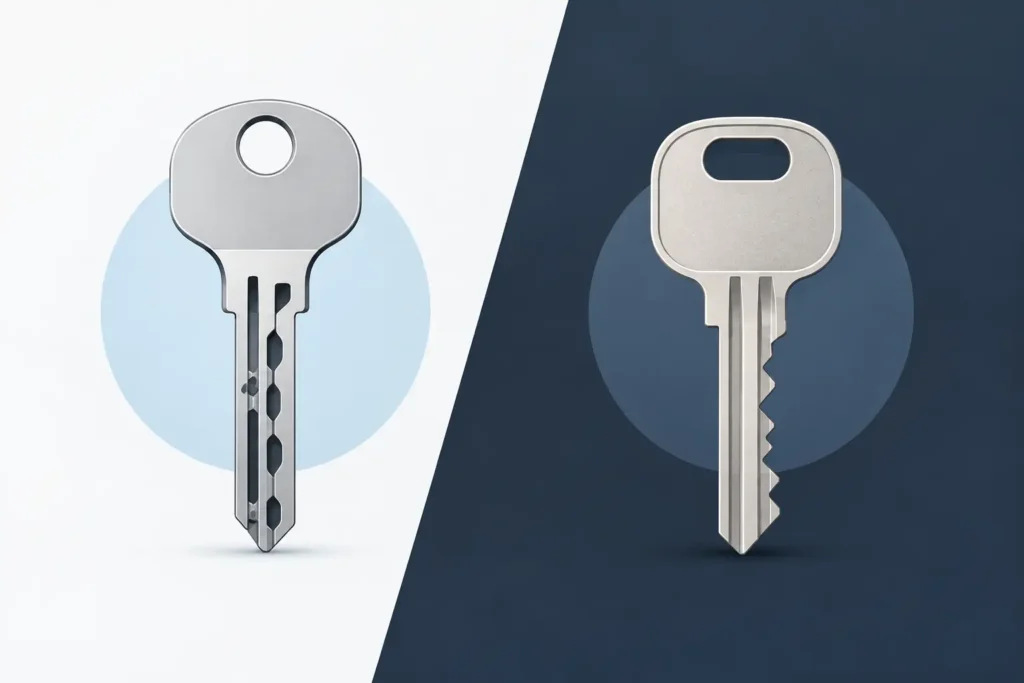
A car key can look simple right up until it is lost, bent, broken in the ignition, or missing its electronic programming. When comparing laser cut versus traditional keys, the difference is more than appearance. The key style can affect how it is cut, the equipment required, the replacement process, and the options available when you need help at your vehicle.
For drivers in Tampa Bay, knowing which type of key you have can make a stressful car-key problem easier to explain. It also helps you avoid assuming that every blank metal key, remote, or key fob is interchangeable.
What Is a Traditional Car Key?
A traditional car key has cuts along one or both outside edges of the blade. These cuts raise and lower the pins inside a lock cylinder, allowing the key to turn the door lock or ignition. Older vehicles commonly used single-sided keys, while some use double-sided versions with cuts on both edges.
This is the familiar style many drivers picture when they think of a car key. The blade is generally flat and thinner than a laser-cut key, and a standard mechanical duplicate can often be cut quickly when a working key is available.
That does not always mean it is a basic replacement. Many traditional-looking keys from the late 1990s forward contain a transponder chip in the plastic head. The metal blade may turn the ignition, but the engine may not start unless the chip is properly programmed to the vehicle.
A traditional key can also be attached to a separate remote, or built into a remote head key with lock and unlock buttons. In those cases, cutting the blade is only one part of the job. The remote functions and transponder system may need to be matched to the vehicle as well.
What Is a Laser-Cut Car Key?
Despite the name, a laser-cut key is typically made with a specialized milling machine rather than an actual laser. You may also hear it called a sidewinder key or high-security key. Its grooves are milled into the flat center area of the blade instead of being cut along the outer edge.
Laser-cut keys are usually thicker, more rigid, and often symmetrical. That means the blade may work when inserted either way into the ignition or door lock. The distinctive center track is one reason this key style requires different cutting equipment than a conventional edge-cut key.
Many laser-cut vehicle keys also include a transponder chip, and some are part of a smart-key or remote system. Still, key blade style and electronic key technology are separate features. A vehicle can have a laser-cut blade with a basic chip, a traditional blade with a transponder, or a proximity smart key with a small emergency blade hidden inside the fob.
Laser Cut Versus Traditional Keys: The Practical Differences
The first difference is how the key is physically made. Traditional keys are edge-cut, while laser-cut keys have internal grooves that require compatible high-security cutting equipment. A hardware-store duplicator that handles a house key or simple car key may not be equipped to make a laser-cut automotive key accurately.
The second difference is the lock design. The internal track and thicker blade of a sidewinder key can provide more possible cut combinations than a basic edge-cut design. That is one reason many manufacturers adopted this style for certain vehicles. It can be harder to duplicate without the proper blank, machine, and key data.
The third difference is replacement planning. If you have one working traditional metal key, making a spare may be fairly straightforward, depending on whether it has a chip. If you have lost the only laser-cut key, replacement can involve obtaining the correct blank, cutting it to the vehicle, and programming the immobilizer or remote functions where applicable.
Neither style automatically makes one key “better” for every driver. Your vehicle’s year, make, model, trim level, and factory security system determine what it needs. A well-made traditional transponder key can be highly effective, while a laser-cut key without correct programming will not start many modern vehicles.
Why Programming Often Matters More Than the Blade
A key that physically turns in the ignition is not necessarily a working car key. Most modern vehicles use an immobilizer system that looks for an authorized transponder signal. If that signal is absent or incorrect, the vehicle may crank without starting, or it may not crank at all.
This is where people can get tripped up when buying a replacement key online or using an unverified blank. The blade may look identical, but the chip type, frequency, circuit board, and programming capability can vary by model year and vehicle configuration. A used key fob can create additional issues because many fobs cannot simply be erased and reused on another vehicle.
For smart keys, the emergency blade is only a backup way to unlock the door. The push-button start system depends on the programmed fob being recognized inside the vehicle. Replacing that fob requires more than cutting the emergency key insert.
A qualified automotive locksmith can identify the correct key type and determine whether the vehicle needs cutting only, transponder programming, remote programming, or all three. This is especially useful when every key has been lost and there is no working sample to copy.
When a Traditional Key May Be the Better Spare
If your vehicle accepts a basic mechanical key and you want a backup for emergencies, a traditional key can be a sensible option. A spare kept at home or with a trusted family member can prevent a lockout from becoming a lost-all-keys situation.
For certain vehicles, an inexpensive-looking metal spare may still need a programmed transponder to start the engine. For others, it may open the doors but not start the car. Before relying on any spare, test it in the door and ignition or start system while you still have a working key available.
If your key has remote buttons, it is also worth deciding what you need the spare to do. Some drivers only need a reliable emergency start key. Others need a fully functional remote or proximity fob for daily use. The best choice depends on convenience, your vehicle’s system, and how you plan to use the spare.
When Laser-Cut Key Service Is Needed
A laser-cut key deserves professional attention when the blade is worn, bent, damaged, or lost. Because the grooves are precise, filing, forcing, or trying to duplicate a damaged blade can make a lock or ignition problem worse.
You may need laser-cut key service if the key turns roughly, only works in one direction, gets stuck in the ignition, or has broken off in a lock. The cause is not always the key itself. A worn ignition cylinder, damaged door lock, or internal steering-column issue can produce similar symptoms. A proper inspection helps prevent replacing a key when the ignition is the real problem.
If the vehicle has no working key, the process may include generating a key from vehicle information, cutting the correct blade, and programming it to the immobilizer. Mobile service means this work can often be performed where the vehicle is parked, whether you are at home, work, or stranded away from the dealership.
What to Have Ready When You Request Car Key Help
The fastest way to get an accurate answer is to provide your vehicle year, make, model, and current location. Let us know whether you have any working keys, whether the vehicle uses a turn-key ignition or push-button start, and whether your key is a metal key, remote head key, flip key, laser-cut key, or smart fob.
Photos can help when available, especially pictures of the front and back of the existing key or fob. If the key is missing, do not worry. Your vehicle details and proof of ownership can help determine the available replacement options. A locksmith may also need the VIN to verify the correct key system.
For cars with ignition concerns, explain exactly what happens. Does the key fail to turn, turn without starting the car, get trapped in the cylinder, or work intermittently? Those details help distinguish a key-cutting or programming issue from an ignition repair need.
A Better Way to Handle a Lost or Damaged Key
The right answer in the laser cut versus traditional keys comparison is not about choosing a style after the fact. Your vehicle was designed for a specific key system, and the goal is to replace or duplicate it correctly without creating a new problem.
If you need a spare, replacing a lost car key, key fob programming, emergency key cutting, or help with an ignition issue, Locksmith Squad can come to your location in Brandon, Tampa, Valrico, Plant City, Lakeland, Clearwater, St. Petersburg, and nearby communities. Call or text with your vehicle information for availability and an estimate. Keeping one tested spare before an emergency happens is often the simplest favor you can do for yourself.