
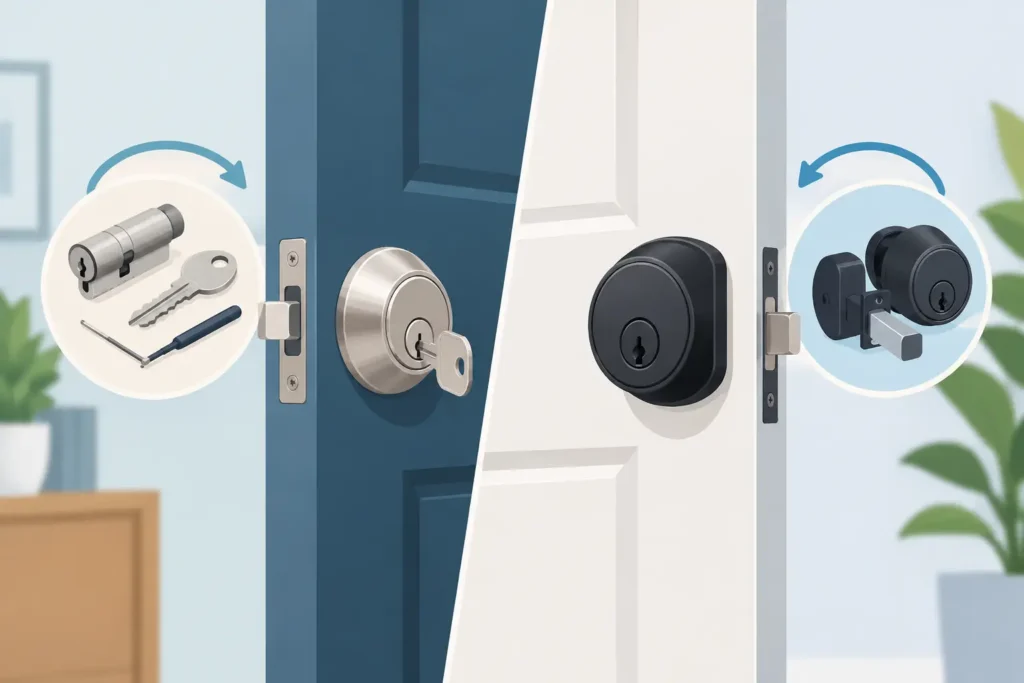
A previous tenant hands over the keys, but you have no idea how many copies are still out there. Or you close on a new home and notice the front door lock is old, loose, and difficult to turn. In situations like these, rekeying versus replacing door locks is not just a cost question. It is a question of what condition your hardware is in, who may have access, and how much security you need from the door itself.
For many homes, rental properties, and businesses, rekeying is a smart, efficient solution. In other cases, replacement is the better move because the lock has worn out, the door needs stronger protection, or the existing hardware no longer fits how the property is used. Knowing the difference helps you make a decision based on the problem, rather than paying for more work than you need.
Rekeying Versus Replacing Door Locks: The Core Difference
Rekeying changes the internal configuration of an existing lock so old keys no longer work. A locksmith removes the lock cylinder, changes the pins or wafers inside it, and cuts new keys that match the updated configuration. The exterior lock hardware stays in place.
Replacing a lock means removing the existing lock hardware and installing a new lock, deadbolt, lever, knob, keypad, or other locking system. The new hardware comes with a new keyway and new keys, and it may offer features the old lock did not have.
Both options can prevent a previous key from opening the door. The right choice depends on the condition and quality of the lock already installed. A rekeyed high-quality deadbolt is often more secure than a brand-new, low-grade replacement lock. On the other hand, rekeying a failing lock does not fix worn internal parts, a loose latch, or a weak deadbolt.
When Rekeying Is Usually the Better Choice
Rekeying makes sense when the lock is in good working condition but control of the keys has changed. This is common after moving into a home, buying a used commercial property, ending a lease, or when an employee with a key no longer needs access.
It is also useful when you have lost a key but believe the lock itself is still reliable. Rather than waiting to see whether the lost key turns up in the wrong hands, rekeying gives you a new key combination while allowing you to keep hardware that is functioning properly.
Property managers often choose rekeying between tenants because it can be practical and consistent. If several doors use compatible locks, they may be rekeyed to work with one new key, reducing the number of keys needed for a property. This only works when the locks are compatible and in good enough condition to keep serving the property well.
Rekeying can be especially worthwhile if you like the finish, style, and fit of your current hardware. Changing locks may require matching existing door prep, strike plates, hole sizes, and decorative hardware. If the current lock is dependable, there may be no reason to change its appearance just to invalidate old keys.
Signs Your Existing Lock Is a Good Rekey Candidate
A lock is generally a good candidate when the key inserts and turns smoothly, the deadbolt extends fully into the strike plate, the latch catches consistently, and the hardware is secure on the door. The lock should not wobble, bind, stick, or require you to force the key.
A professional locksmith can inspect the cylinder, latch, strike, and door alignment before recommending rekeying. That inspection matters because a key issue can sometimes hide a mechanical issue. For example, a deadbolt that only turns when you pull hard on the door may need an alignment repair, not just new keys.
When Replacing Door Locks Is the Smarter Investment
Replacement is the better option when the existing lock is damaged, unreliable, outdated, or insufficient for the door it protects. A lock that sticks frequently, has a broken keyway, spins without engaging, or has visible corrosion may not be worth rekeying.
You may also want replacement if the lock is a basic grade of hardware on an exterior entry door. Security depends on more than the key cylinder. The deadbolt, strike plate, mounting screws, door frame, and installation all affect how well the opening resists forced entry. Upgrading from a light-duty lock to a properly installed quality deadbolt can address weaknesses that rekeying cannot.
Replacement is often appropriate after an attempted break-in if there is damage to the lock, door edge, strike plate, or frame. Even if a key still operates the lock, bent components or weakened mounting points can affect security and reliability. A locksmith can identify whether the issue is limited to the lock or whether the door and frame need attention as well.
New locks can also make sense when you want a different type of access. You may be moving from keyed knobs to deadbolts, adding a keypad for a rental or office, installing restricted-key options, or updating a commercial entry system. In these situations, replacement provides functionality that rekeying cannot create.
Security Is Not Only About the Key
A common mistake is assuming that a new key automatically means a secure door. Rekeying eliminates access from old keys, which is a major benefit after a move, tenant turnover, or lost key. But it does not strengthen a weak lock body or correct poor installation.
Likewise, a new lock will not perform as intended if the door is warped, the strike is misaligned, or short screws barely reach the frame. A quality lock should operate smoothly without lifting, pushing, or pulling the door. The bolt should extend fully into a properly installed strike, and the hardware should be firmly secured.
For commercial properties, access needs can change more often than hardware wears out. Rekeying may be the practical answer after staff changes, while replacement may be necessary when the business needs master keying, electronic access, panic hardware, or a more controlled entry plan. The goal is to match the lock solution to the property, the traffic level, and who needs authorized access.
What About Smart Locks and Keypads?
Smart locks and keypads introduce another decision. If you are replacing a conventional lock because you want code-based access, remote management, or temporary user codes, then replacement is required. These features can be useful for rental properties, busy households, and businesses that need to change access without collecting physical keys.
Still, electronic convenience does not remove the need for sound mechanical security. The lock should be compatible with the door, installed correctly, and supported by a reliable deadbolt and strike. Consider who will manage codes, how backup access works, and whether the property needs a physical key override.
If your smart lock also has a physical key cylinder, it may be possible to rekey that cylinder in some cases. Compatibility varies by manufacturer and model, so an inspection is the best way to determine your options.
Cost Depends on the Problem, Not Just the Service Name
Rekeying is often less expensive than replacing every lock because it uses the hardware already on the door. However, it is not always the least expensive choice if the lock is heavily worn, difficult to service, or needs repairs before it can be rekeyed properly.
Replacement costs vary based on the lock type, security grade, finish, number of doors, and whether the door requires adjustments. A basic interior lock is very different from a commercial-grade deadbolt or electronic access system. Rather than choosing solely on the upfront price, consider how long the hardware is likely to last and whether it solves the actual security concern.
If you manage multiple units or locations, standardizing compatible lock hardware can make future rekeying simpler. That planning can save time during tenant turnover and make key control more organized over the long term.
How to Decide Before Calling a Locksmith
Start with three straightforward questions. Do you trust everyone who may have a copy of the current key? Does the existing lock work smoothly and feel secure? Do you need new features or stronger hardware?
If the only concern is old or unaccounted-for keys and the lock is in good shape, rekeying is likely worth discussing. If the lock is damaged, low quality, unreliable, or no longer meets your needs, replacement may be the better recommendation.
When you call or text Locksmith Squad, describe the property type, the number of doors, whether the locks are working properly, and what changed. A homeowner who just moved in has different needs from a property manager preparing several units or a business updating employee access. We can help assess whether rekeying, lock repair, or replacement fits the situation and provide clear options before work begins.
For customers across Tampa Bay, mobile locksmith service can save the hassle of removing hardware and bringing it to a shop. More importantly, it gives the locksmith a chance to evaluate the complete door setup, including alignment, latch operation, and strike condition. The best choice is the one that leaves you with controlled access, dependable operation, and a door you do not have to second-guess every time you lock it.