
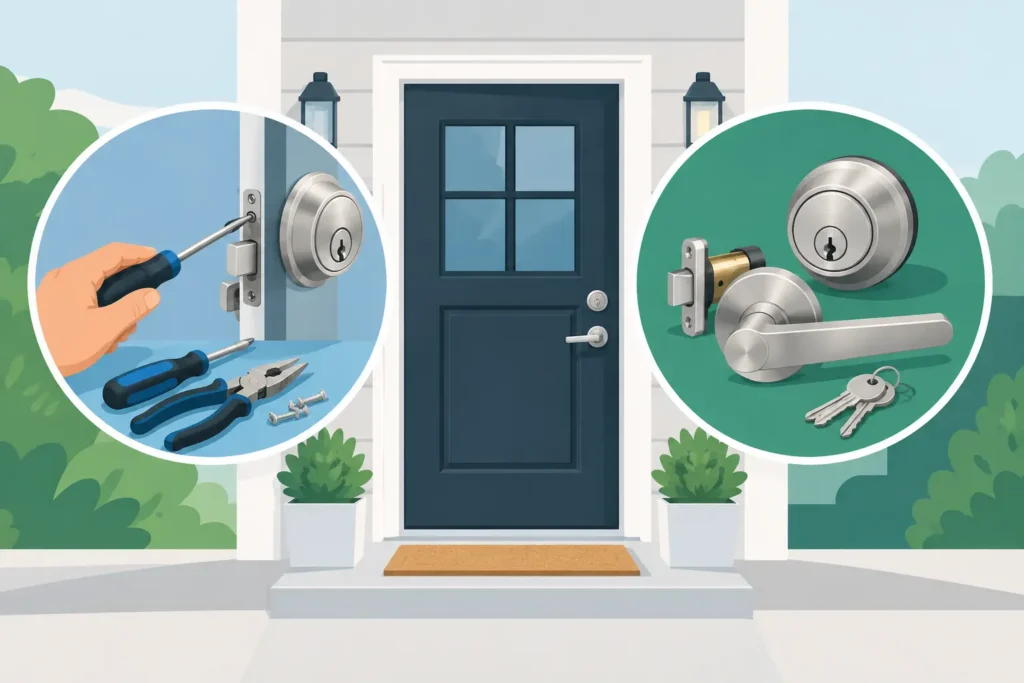
A front-door lock that sticks when you are carrying groceries is more than a daily annoyance. A deadbolt that will not turn, a key that catches, or a loose lockset can leave your home difficult to secure and harder to use. Residential lock repair addresses many of these problems without automatically replacing every piece of door hardware. The right answer depends on what failed, how old the lock is, and whether the lock still provides the level of security your household needs.
At Locksmith Squad, we help homeowners, renters, landlords, and property managers understand the practical options. Sometimes a skilled repair restores a good lock. Other times, replacement or rekeying is the safer, more sensible choice. We provide clear recommendations and mobile locksmith service throughout Tampa Bay when you need help at your property.
What residential lock repair can solve
Most residential locks have several parts that can wear, loosen, bend, or fall out of alignment over time. A problem does not always mean the entire lock has failed. Repairs may involve tightening and securing the lock hardware, correcting a misaligned strike plate, servicing a sticky latch or deadbolt, removing a broken key, or replacing worn internal components when parts are available.
Door alignment is one of the most common causes of a stubborn deadbolt. Changes in humidity, settling, loose hinges, or a door that has been slammed repeatedly can shift the door slightly. The bolt then hits the edge of the strike plate instead of entering it cleanly. Forcing the key or thumbturn can eventually damage the lock, even though the original issue was the door alignment.
A loose doorknob or lever is another repairable concern. If the interior and exterior pieces move independently, the mounting screws, spindle, or internal mechanism may need attention. Leaving it loose can make the problem worse and may cause the latch to stop retracting when you need it.
A key that goes in but will not turn can point to debris, worn key cuts, a damaged cylinder, or internal pin wear. Lubrication may help in limited cases, but it is not a universal fix. The wrong product can collect dust or gum up small moving parts. If the lock has been unreliable for a while, an inspection is better than repeatedly forcing it.
When repair is the better choice
Repair usually makes sense when the existing lock is in good condition and the issue is isolated. A quality deadbolt with a misaligned strike plate, loose trim, or a damaged latch may have plenty of useful life left once the specific problem is corrected. Repair can also preserve matching hardware across several doors, which matters to homeowners who prefer a consistent appearance.
It is often a good option after a broken key incident. If the key broke because it was bent, worn out, or used with too much force, the cylinder may still be serviceable after extraction and testing. We can assess the lock rather than assuming that a broken key requires a whole new lock.
For rental homes and managed properties, a targeted repair may be appropriate when the hardware is still secure and compatible with the property’s key system. The decision should also consider who has had keys. If a tenant has moved out, repair alone does not control old-key access. Rekeying is usually the more relevant service in that situation.
Signs lock replacement may be safer
Not every lock deserves another repair. Replacement is often the better route when the internal mechanism is badly worn, the lock is damaged after an attempted break-in, or the hardware is a low-security style that no longer fits the door’s needs. A lock can still turn and latch while offering less resistance than a properly installed modern deadbolt.
Consider replacement when you see recurring problems after prior repairs, a cylinder that repeatedly catches, visible cracking or corrosion, a bent deadbolt, or a latch that does not consistently extend and retract. A lock that requires special handling every time you leave the house is not dependable security.
Replacement is also worth considering if the door has been upgraded but the lock hardware has not. For example, a solid exterior door paired with a weak or poorly installed lock leaves an avoidable weak point. The lock, reinforced strike area, screws, door frame, and installation all work together. Strong hardware installed incorrectly will not perform as intended.
Smart locks can add convenience for some households, especially where several family members, cleaners, or property managers need controlled access. However, they are not automatically the best choice. They require battery management, careful setup, and a plan for physical key access or emergency entry. A conventional deadbolt remains a straightforward, dependable option when installed and maintained properly.
Rekeying, repair, and replacement are different services
These services are often grouped together, but they solve different problems. Knowing the distinction can help you request the right help when you call or text.
Residential lock repair restores function. It is focused on a lock that is loose, jammed, misaligned, damaged, or otherwise not operating correctly.
Rekeying changes the internal key configuration so old keys no longer work. The lock hardware stays on the door, but it is operated by a new key. This is useful after a move, a tenant turnover, a lost house key, or any situation where you are unsure who may still have a copy.
Lock replacement removes the existing hardware and installs new hardware. It may be necessary because the old lock is damaged, incompatible, outdated, or not the security level you want. In some cases, replacing a lock and rekeying other exterior doors to match is the most convenient arrangement.
Avoid turning a small problem into a lockout
It is tempting to keep using a difficult lock until it finally stops working. That approach can lead to a lockout, a broken key inside the cylinder, or damage to the door and frame. Do not force a key that will not turn, and do not use pliers to twist it. Extra force can snap the key or damage components that could otherwise be repaired.
You should also avoid spraying random household oils into a cylinder. Some products may seem to help briefly, then attract dirt and make the action worse. If the key is suddenly hard to insert or the deadbolt feels rough, use another entrance if possible and arrange for a professional inspection before the lock fails completely.
If you are locked out, keep the door and frame intact. Damage from drilling, prying, or forcing a door can cost far more than professional entry service and may weaken the opening afterward. A qualified locksmith can evaluate the lock and explain the available entry and repair options.
What to expect from a home lock service visit
A proper service visit starts with identifying the actual source of the problem. We look at how the key operates, whether the latch and deadbolt align with the strike plate, the condition of the door and hinges, and whether the hardware has signs of internal wear or damage. That matters because replacing a lock without correcting a sagging door can leave the new lock difficult to operate too.
Once the cause is clear, you can choose between repair, rekeying, or replacement based on the condition of the hardware and your security priorities. For a faster estimate and better preparation, tell us your location, whether the door is locked or accessible, the type of lock involved, what it is doing, and whether you have working keys. Photos of the lock and door edge can also be helpful when you are able to send them.
For property managers, having the unit number, authorization details, and the desired keying arrangement ready can prevent unnecessary delays. Homeowners should consider whether other exterior doors need to work with the same key before choosing a replacement. Planning that detail during the visit is easier than discovering later that every door now requires a different key.
Residential lock repair for Tampa Bay homes
Florida weather, busy households, rental turnovers, and frequent use all take a toll on exterior door hardware. Whether you are dealing with a sticking deadbolt in Brandon, a rental turnover in Riverview, or a damaged entry lock in Tampa, the goal is the same: restore dependable access without overlooking security.
A lock should turn smoothly, latch consistently, and give you confidence when you leave home. If yours is loose, difficult to operate, or damaged, call or text Locksmith Squad with the details of the problem for availability and an estimate. Addressing it before the next failed turn can keep a repair straightforward and your home easier to secure.