
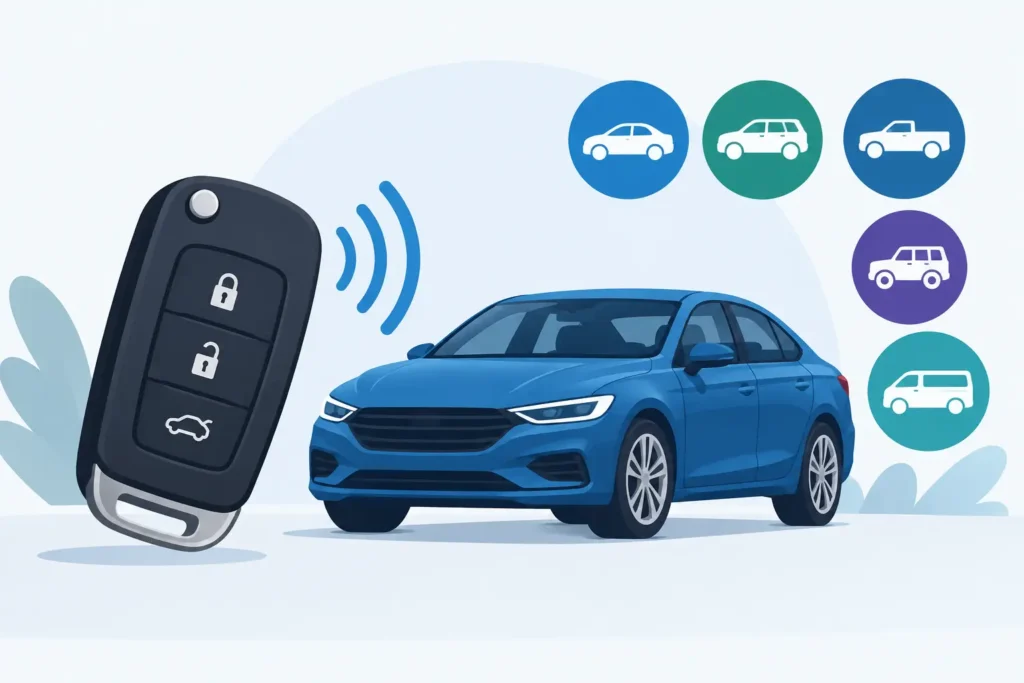
A metal key that looks ordinary can still contain the electronic chip your vehicle needs to start. If you are asking which cars use transponder keys, the short answer is most vehicles built from the late 1990s through the 2010s do, although the exact year varies by make, model, trim, and market. The chip is small, but it makes a major difference when you need a replacement key.
A transponder key has a coded chip inside its plastic head. When you turn the key in the ignition, the vehicle reads that chip and compares it with the codes stored in its immobilizer system. If the code is not recognized, the engine may crank but will not start. That is why cutting a new key blade alone is often not enough.
Which Cars Use Transponder Keys?
Transponder technology became common as automakers added immobilizer systems to reduce theft. Many domestic, Asian, and European brands use it in at least part of their lineup. However, there is no single cutoff year that applies to every vehicle.
Ford, Lincoln, Mercury, Chevrolet, GMC, Cadillac, Buick, Pontiac, Dodge, Chrysler, Jeep, Toyota, Lexus, Honda, Acura, Nissan, Infiniti, Hyundai, Kia, Mazda, Mitsubishi, Subaru, Volkswagen, Audi, BMW, Mercedes-Benz, Volvo, and many other manufacturers have used transponder keys. On many models, the conventional metal ignition key has a black plastic head that contains the chip.
For example, many Ford vehicles used PATS transponder keys beginning in the mid-to-late 1990s. Numerous GM models adopted chipped keys around the same period, while many Toyota, Honda, Nissan, Hyundai, and Kia models used transponder systems broadly in the 2000s. European vehicles often have chip-equipped keys as well, sometimes combined with a remote fob or more advanced smart-key technology.
The practical takeaway is simple: if your car was built after the 1990s and has a traditional key ignition, assume it may require programming until a professional verifies otherwise. A blank key that fits the ignition does not prove it will start the car.
Common vehicles with transponder keys
The following examples are common, but the vehicle year and configuration still matter:
- Ford F-150, Escape, Explorer, Focus, Fusion, Mustang, and many Super Duty trucks
- Chevrolet Silverado, Equinox, Malibu, Impala, Tahoe, Traverse, and GMC Sierra and Yukon models
- Dodge Ram, Charger, Challenger, Durango, Chrysler 300, Jeep Grand Cherokee, Wrangler, and Cherokee
- Toyota Camry, Corolla, RAV4, Tacoma, Tundra, Highlander, and Lexus vehicles
- Honda Civic, Accord, CR-V, Pilot, Odyssey, and Acura models
- Nissan Altima, Sentra, Rogue, Maxima, Frontier, Titan, and Infiniti models
- Hyundai Elantra, Sonata, Tucson, Santa Fe, Kia Forte, Optima, Sorento, and Sportage
- Volkswagen Jetta, Passat, Golf, Tiguan, Audi A4 and Q5, plus many BMW and Mercedes-Benz models
Some earlier base-trim vehicles may use a standard mechanical key with no chip. Conversely, some newer models no longer use a traditional transponder key at all because they use a proximity smart key or push-button start fob. Both systems use electronic authorization, but the replacement process is different.
How to Tell if Your Key Has a Chip
The fastest answer usually comes from your vehicle identification number, year, make, model, and trim. A qualified automotive locksmith can check the correct key type and programming requirements before making a replacement.
You can also look for clues. A key with a thick plastic head is more likely to contain a transponder chip than an all-metal key. Some keys have a small molded logo, a separate remote attached to the key head, or markings that identify a key series. None of these signs are final proof, though. Manufacturers changed key designs over the years, and a previous owner may have replaced the original key.
Another clue is how the vehicle reacts. If you have a newly cut key that turns the ignition but the engine starts and immediately dies, or it cranks without starting, the car may not be detecting a properly programmed transponder. A flashing security or immobilizer light can point in the same direction. Other mechanical or electrical problems can produce similar symptoms, so the key system should be checked rather than guessed at.
Transponder Key, Remote Key, or Smart Key?
These names are often used interchangeably, but they describe different features. A transponder key is primarily an anti-theft starting key. It has an embedded chip that communicates with the immobilizer.
A remote head key combines two functions in one unit: the blade and transponder start the vehicle, while buttons lock, unlock, open the trunk, or activate the panic alarm. The remote portion and the transponder portion may require separate programming steps.
A smart key, also called a proximity key, is usually used with push-button start. You can often keep it in a pocket or bag while the vehicle detects it nearby. It is not typically cut and turned in an ignition the same way a traditional transponder key is, though it may contain an emergency metal blade.
Knowing the difference helps set realistic expectations. A replacement for a basic chipped key may be straightforward, while a proximity fob for a late-model vehicle can require more specialized equipment, a specific compatible key, and additional programming procedures.
Why Programming Is Part of the Job
A transponder key replacement has two separate parts: cutting the blade to match your locks and programming the chip to communicate with the vehicle. Skipping either step can leave you with a key that fits but does not start the car.
Some vehicles allow limited owner programming when you already have a required number of working keys. Many do not. If all keys are lost, programming commonly requires professional diagnostic equipment and access to the vehicle’s immobilizer system. Certain makes and newer models also have security procedures that affect what can be programmed and how.
This is one reason a bargain blank bought online can create frustration. The key may be the wrong chip type, an incompatible aftermarket version, or a blank that cannot be programmed for that vehicle. A professional locksmith starts by confirming compatibility rather than cutting and hoping for the best.
What to Do When You Lose a Transponder Key
If your only working key is gone, avoid forcing the ignition or trying to bypass the immobilizer. The vehicle still needs a correctly matched key, and forcing components can add an ignition repair to an already inconvenient situation.
When you call or text for help, have the year, make, model, location, and whether any working keys remain ready to share. If you know whether the vehicle has a turn-key ignition, remote head key, or push-button start, include that too. A photo of the existing key or key fob can be useful when one is available.
For drivers in Tampa Bay, mobile automotive locksmith service can save the trouble of arranging a tow just to get a key made. We can come to your home, workplace, parking lot, or roadside location, verify the key system, cut the correct key, and program many transponder keys and fobs on site. Availability and procedures depend on the vehicle, so clear vehicle information helps us provide an accurate estimate.
Is It Worth Getting a Spare?
For a transponder-equipped vehicle, a spare is usually far less stressful to arrange while you still have a working key. It gives you a backup for a misplaced key, a family driver, or a key that is damaged by wear or water exposure. It can also make some programming situations easier, depending on the vehicle.
A spare does not always need every remote feature to be useful. Some owners choose a fully functional remote key, while others keep a basic programmed transponder key as an emergency backup. The right option depends on your vehicle and how you use it.
If your key is cracked, intermittently recognized, or has stopped operating after getting wet, do not wait for it to fail completely. Call or text Locksmith Squad with your vehicle details for availability and an estimate, and we can help you choose a replacement that gets you back on the road with confidence.