
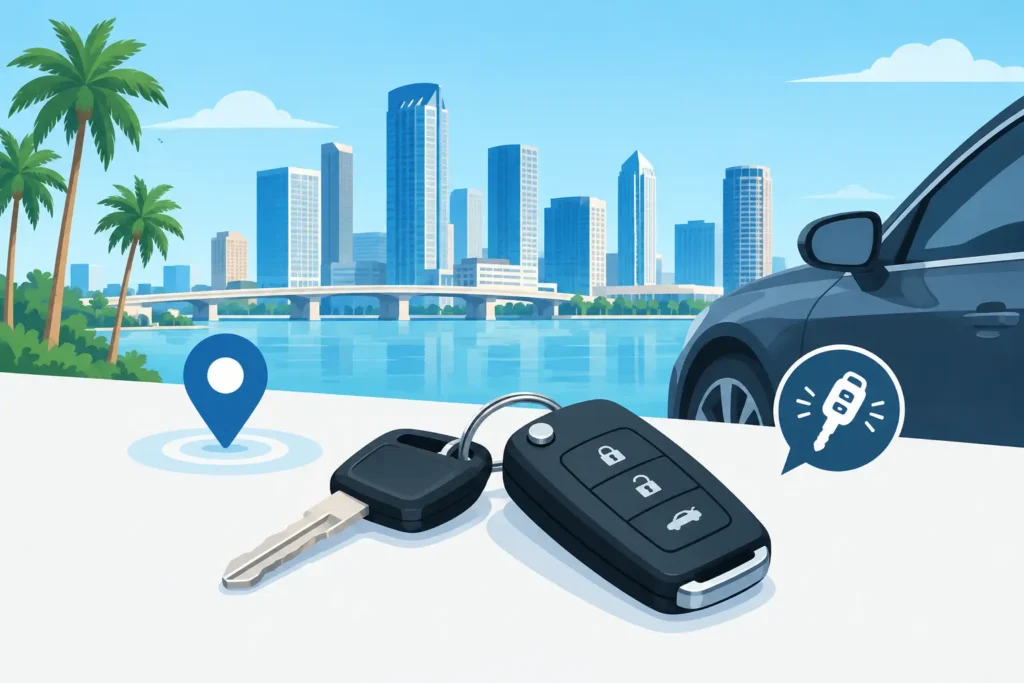
A missing car key can turn an ordinary stop at a Tampa grocery store, job site, beach access point, or driveway into a major interruption. This Tampa vehicle key guide explains the practical choices you have when a key is lost, damaged, locked inside the vehicle, or no longer communicating with the car. The right solution depends on your vehicle, the type of key it uses, and whether you still have a working key available.
Modern vehicle keys are not all alike. Some can be cut quickly from a metal blank, while others need precise electronic programming before the engine will start. Knowing the difference helps you describe the problem clearly and avoid spending money on a key that will open the door but will not operate the vehicle.
Start With the Type of Vehicle Key You Have
Most vehicles on the road use one of several key systems. A traditional metal key operates the door and ignition mechanically. It is common on older vehicles and some work vehicles, although a plain-looking metal key can still contain a security chip.
A transponder key has a chip inside the head of the key. When you turn it in the ignition, the vehicle reads that chip and allows the engine to start only if the code matches. A new key must be both cut and programmed. This system is common on many Ford, Chevrolet, Toyota, Honda, Nissan, Hyundai, Kia, Dodge, Chrysler, and Jeep models.
Remote-head keys combine the key and remote buttons in one unit. Key fobs may control locking, panic alarms, trunk release, remote start, or sliding doors. Push-button-start vehicles typically use a proximity smart key that can remain in a pocket or bag while the vehicle starts with a button. These keys often include an emergency metal blade for manual entry if the fob battery dies.
The key type matters because a replacement is not simply a matter of copying what you see. A smart key or transponder key needs compatible parts and programming equipment that communicates correctly with the vehicle’s security system.
Tampa Vehicle Key Guide: What to Do When Keys Are Lost
When all keys are missing, resist the urge to force a door, pry around a window, or use an online-programmed fob that may not match your vehicle. Those attempts can damage weather stripping, lock components, door panels, or the vehicle’s electronic system. They also rarely solve the underlying programming requirement.
A professional mobile automotive locksmith can usually come to the vehicle, identify the key system, cut a new key or emergency blade, and program compatible keys when the vehicle supports the required service. This saves you from arranging a tow just to have a key made. For many makes and models, mobile service is a convenient alternative to dealership scheduling, especially when the car cannot be started.
Have proof of ownership available. Depending on the situation, that may include your driver’s license, registration, title, insurance documentation, or other records tying you to the vehicle. A legitimate locksmith will verify authorization before creating a key for a vehicle.
When you call or text, provide the year, make, and model, your current location, and whether every key is lost or one working key remains. A photo of the key, fob, or vehicle identification number can also help confirm availability. Let us know whether the vehicle has an ignition cylinder or push-button start, and describe any warning messages you see on the dashboard.
A Working Key Changes Your Options
If you still have one working key, now is the best time to make a spare. A duplicate gives you a backup before a lost-key situation becomes an all-keys-lost job. It can also be useful when a household shares a vehicle, a business has employees driving a work truck, or a used-car dealer needs an additional key for a sale.
A spare can be less involved than replacing all keys because the original provides useful information for cutting and verification. That said, the cost and process still depend on the vehicle. A simple duplicate differs substantially from a proximity fob for a late-model European vehicle, for example.
Keep the spare somewhere secure away from the vehicle. Hiding it under the car may seem convenient, but it can create a security problem and expose the key to moisture, heat, and theft. At home, a labeled key envelope or secure drawer is a better choice.
When a Key Fob Stops Working
Not every failed fob needs replacement. The first possibility is a weak or dead battery, particularly if the fob works only at close range, responds inconsistently, or displays a low-key-battery message. Replacing the battery may restore normal operation, but use the correct battery type and avoid touching electronic contacts unnecessarily.
If a new battery does not help, the fob may have internal damage. Florida heat, rain, a trip through the washing machine, cracked buttons, and repeated drops can all affect a fob. Water exposure deserves quick attention. Remove the battery if it is safe to do so, avoid pressing buttons repeatedly, and have the fob evaluated before corrosion spreads.
A replacement fob normally needs more than a battery and shell. It must be compatible with the vehicle, and many fobs require programming. In some cases, the emergency key blade also needs cutting. We can explain whether your vehicle needs a replacement remote, a complete smart key, programming only, or a separate repair to the mechanical key.
Lockouts Need a Careful Approach
A vehicle lockout is stressful, but it does not automatically mean you need a new key. If the keys are visible inside the vehicle and you have a working spare elsewhere, a professional lockout service can often provide entry without damaging the lock or door.
Do not use coat hangers, wedges, or improvised tools on a modern vehicle. Side airbags, wiring, lock rods, frameless windows, and electronic door systems make do-it-yourself entry riskier than it used to be. The goal is not merely to get the door open. It is to get you back into the vehicle without creating an expensive repair afterward.
If the key is locked in the trunk, tell the locksmith. The correct entry method can vary by vehicle design, trunk access, and whether the rear seats fold down.
A Key Problem May Actually Be an Ignition Problem
A key that will not turn, comes out hard, or breaks in the ignition is not always a key-cutting issue. Worn ignition wafers, a damaged ignition cylinder, steering-wheel pressure, or debris inside the keyway may be involved. For push-button vehicles, the issue could be a weak fob battery, brake-switch problem, antenna issue, or another starting-system fault.
Avoid forcing the key. Turning it harder can break the blade, damage the ignition, or leave you with a more complicated repair. If the steering wheel is locked, gently relieve pressure on the wheel while turning the key without using excessive force. If it still will not move, stop and arrange professional help.
Mobile locksmith service can include broken key extraction, emergency key cutting, ignition repair, and ignition replacement where appropriate. The proper repair depends on what has failed. Replacing an ignition without diagnosing the issue first is not always necessary, and rekeying may be needed so the doors and ignition can continue to work with the same key when possible.
Why Programming Matters More Than Ever
Programming is the step that allows a vehicle to recognize an authorized transponder, remote, or smart key. It is separate from cutting a metal blade. A key can fit the lock perfectly and still fail to start the engine if it is not programmed correctly.
Some vehicles allow limited owner procedures when an existing programmed key is available. Others require professional diagnostic equipment, security access, and specific procedures. European makes such as BMW, Mercedes-Benz, Audi, and Volkswagen can have additional system requirements. The same is true for many newer domestic and Asian vehicles with advanced immobilizer systems.
This is why vehicle details matter before an estimate is provided. The year can change the key technology even within the same model name. A 2014 vehicle and a 2024 version of that vehicle may use entirely different fobs, chips, and programming methods.
Mobile Help Across Tampa Bay
When your car will not start because the key is missing or malfunctioning, bringing the solution to the vehicle is often the most practical option. Locksmith Squad provides mobile automotive locksmith service throughout Tampa and nearby communities, including Brandon, Valrico, Riverview, Plant City, Clearwater, St. Petersburg, and Lakeland. We work with most major American, Asian, and European vehicle brands and explain the available options before work begins.
The best next step is simple: call or text with your vehicle year, make, model, location, key type, and whether you have any working keys. Even if you are unsure what type of key you have, a clear photo and a description of the problem can help us point you toward the right replacement or repair.